
Safety Rate
When a couple finds it difficult to conceive, the cause is related to the male partner in nearly half of all cases. Despite this, male infertility conditions are still not talked about as openly as they should be. Many men feel uncertain or confused about where to start.
This page will help you understand the most common male infertility conditions, what causes them, how they are diagnosed, and what treatment options are available. Dr. Fathimunissa at Fatima Fertility, with centres in Anna Nagar and Triplicane, Chennai, has guided many men and couples through this journey with care, honesty, and real medical support.
You are not alone, and in many cases, treatment is very much possible.
Hormones are the body's messengers. When they are balanced, the reproductive system works well. When they are not, sperm production and sexual function can both be affected. Hormonal imbalance is one of the more treatable male infertility conditions when caught early.
Dr. Fathimunissa will start with blood tests to measure hormone levels precisely. Based on results, treatment may include:
Once hormone levels are brought back to a healthy range, sperm count and quality often improve significantly. Many couples achieve a natural pregnancy after hormone treatment alone. For others, the improved sperm quality supports assisted fertility treatments more effectively.
Azoospermia means there are no sperm found in the semen at all. It sounds alarming, but this does not automatically mean fatherhood is impossible. In fact, many men with azoospermia have been able to have children with the right medical help.
Even with azoospermia, sperm retrieval is successful in many cases — particularly for obstructive azoospermia. When combined with ICSI, pregnancy rates are encouraging. Dr. Fathimunissa discusses realistic expectations with every couple based on their specific situation.
Sperm retrieval is possible in many azoospermia cases
Some male infertility conditions have a genetic basis. This means the problem is carried in a man's chromosomes or genes, and it can affect how the testes develop, how sperm are produced, or how they function.
Genetic testing typically involves a blood sample for karyotype analysis (chromosome mapping) and, where relevant, specific gene mutation tests such as Y chromosome deletion analysis or CFTR screening.
A genetic diagnosis does not always close the door to parenthood. Many couples with genetic causes of male infertility go on to have healthy children using assisted reproductive technology. Honest counselling and careful planning make a real difference.
Premature ejaculation (PE) is one of the most common sexual health concerns in men. While it does not affect sperm quality directly, it can make natural conception difficult and also causes significant emotional distress for both partners.
Most men see clear improvement with appropriate treatment. At Fatima Fertility, Dr. Fathimunissa ensures this topic is discussed with complete privacy and without any judgement. You can speak openly about what you are experiencing.
A varicocele is an enlargement of the veins inside the scrotum — similar to varicose veins in the legs. It is one of the most commonly identified and correctable causes seen among men at fertility clinics, including Fatima Fertility in Chennai.
The enlarged veins allow blood to pool, raising the temperature in the scrotum. Sperm production is highly sensitive to temperature — even a small rise of 1 to 2 degrees can significantly reduce sperm count, motility, and shape. Varicocele can also contribute to testosterone decline over time.
A varicocele is often found during a physical examination. A scrotal ultrasound with Doppler imaging confirms the diagnosis and shows the size and location of the affected veins. Most varicoceles appear on the left side, though they can affect both.
Sperm parameters typically begin improving within three to six months after surgery. Around 50 to 70 percent of men see meaningful improvement in sperm count and motility after varicocelectomy. Natural pregnancy rates also improve, and for those who still need assisted conception, improved sperm quality leads to better outcomes.
50-70% of men show sperm improvement after varicocele treatment
Erectile Dysfunction is the inability to achieve or maintain an erection long enough for intercourse. It can be physical, psychological, or both.
Regular workouts, quitting smoking, and managing weight significantly boost erectile function and fertility outcomes.
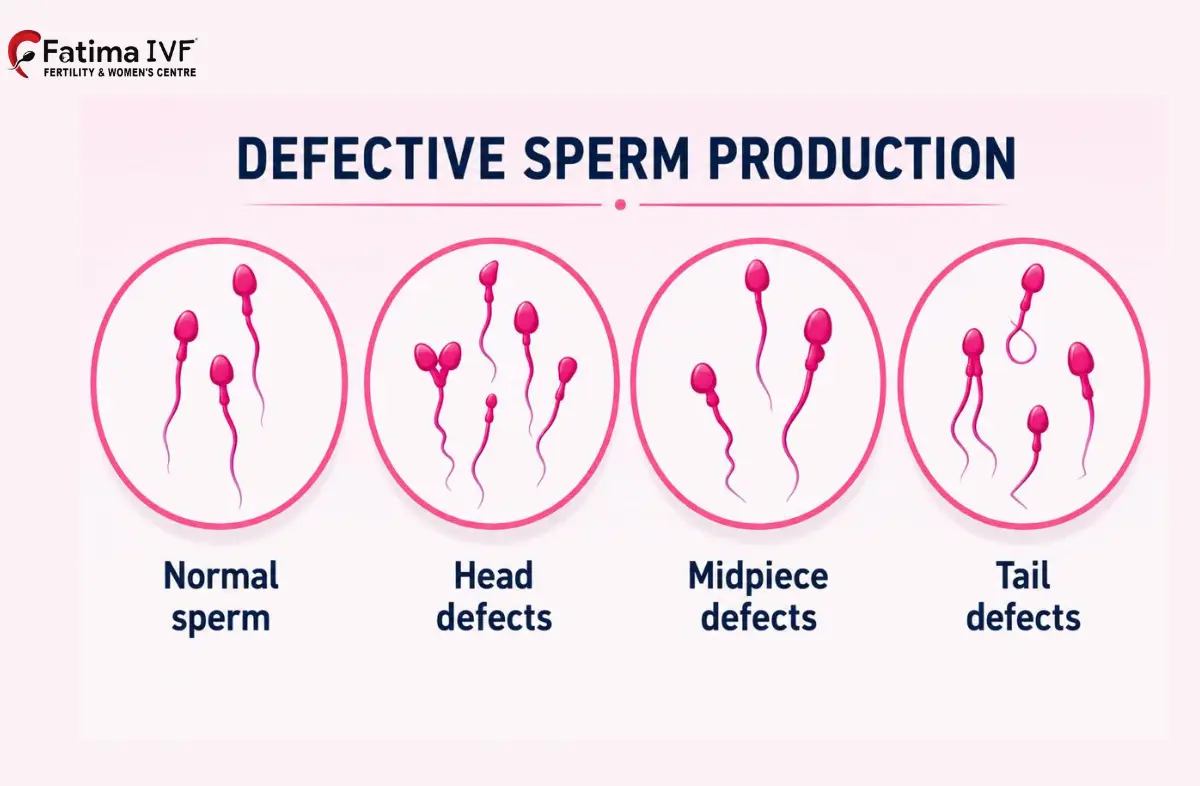
Defective sperm production covers a range of problems — from low sperm count (oligospermia) to poor sperm movement (asthenospermia) to abnormal sperm shape (teratospermia). A man may have one of these or a combination of all three. This is one of the most frequently seen categories of male infertility conditions in Chennai at our clinic.
A semen analysis is the main test, measuring sperm count, motility, and morphology. If results are abnormal, a repeat test is usually done after a few weeks. Additional tests may include hormonal blood tests, scrotal ultrasound, and DNA fragmentation testing to check for hidden sperm damage.
Sperm are produced in a cycle of approximately 74 days. Positive changes in lifestyle or treatment can begin showing results in semen analysis within about three months. For men pursuing IVF or ICSI, even small numbers of healthy sperm are often sufficient to achieve fertilisation.
The vas deferens is the tube that carries sperm from the testes to the urethra. In some men, one or both of these tubes are missing from birth — a condition called Congenital Bilateral Absence of the Vas Deferens (CBAVD). The testes produce sperm normally, but the sperm have no pathway to exit.
Physical examination reveals the absence of the vas deferens in the scrotum. A semen analysis shows azoospermia (no sperm). CFTR genetic testing confirms the underlying mutation. Testing the female partner for CFTR mutations is also recommended.
Because the testes function normally in CBAVD, sperm retrieval is usually successful. Pregnancy rates through ICSI in these cases are comparable to other IVF cycles with surgically retrieved sperm. The condition is entirely manageable with proper evaluation and planning.
Sperm retrieval is usually successful — the testes work normally in CBAVD
Sexual dysfunction is a broad term covering any ongoing difficulty a man has with sexual function. Many men experience this at some point in life — and it becomes particularly relevant when a couple is trying to conceive.
At Fatima Fertility, sexual dysfunction is always addressed as a whole — both its physical side and its emotional side. Dr. Fathimunissa ensures that men feel heard and that couples receive support as a unit, not just as individual patients. Conversations are always private and handled with the greatest sensitivity.
When you visit Fatima Fertility for a male fertility evaluation, the aim is to get a complete picture — not just a single test result. Dr. Fathimunissa takes time to understand your full health history, lifestyle, and concerns before recommending any investigation.
All findings are explained clearly, and the next steps are always discussed with you — never rushed, never overwhelming. The goal is for you to understand exactly what is happening and to feel confident about the path forward.
Dr. Fathimunissa
MBBS, MS (OBG), Fellowship in Reproductive Medicine
Dr. Fathimunissa is the lead fertility specialist at Fatima Fertility, with centres in Anna Nagar and Triplicane, Chennai. She has worked with hundreds of couples across Tamil Nadu who are navigating the challenges of infertility — including men facing complex male infertility conditions. Her approach is always thorough, compassionate, and built around honest communication.
Dr. Fathimunissa believes that every man and every couple deserves a clear explanation of what is happening and a realistic understanding of their options. She does not believe in one-size-fits-all solutions. Every treatment plan at Fatima Fertility is tailored to the individual.
Meet our experienced team of anaesthesiologists dedicated to your safety and comfort
Low sperm count, reduced libido, difficulty maintaining erections, or abnormal semen consistency are key signs. Regular testing and a fertility specialist consultation help identify the cause early.
Yes, in some cases. Adopting a healthy diet, maintaining ideal weight, reducing stress, and avoiding smoking or alcohol can naturally improve sperm quality and hormonal balance.
Success depends on the condition. For issues like varicocele, azoospermia, or hormonal imbalance, success rates range from 60–90% when combined with advanced treatments like IVF or ICSI.
Take the first step toward parenthood. Book an appointment with our expert team to receive expert guidance, emotional support, and advanced fertility solutions designed just for you.