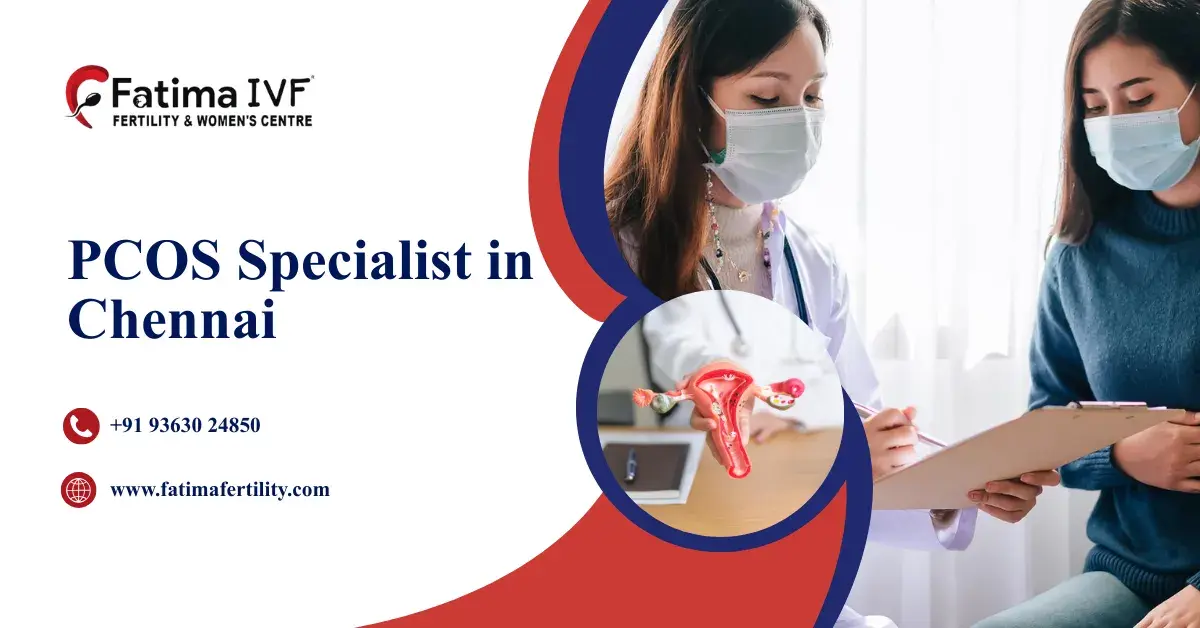
Polycystic Ovary Syndrome, or PCOS, is one of the most common hormonal conditions among women today. It can affect periods, skin, weight, and the ability to conceive. Dr. Fathimunissa has spent years helping women in Chennai understand their PCOS and build a treatment plan that actually fits their life, not just their lab reports.
What Does a PCOS Specialist Do?
A gynecologist who focuses on hormone health looks after women with irregular cycles, weight changes, acne, and fertility concerns linked to PCOS. Dr. Fathimunissa reviews your cycle history, checks your hormone levels, and builds a plan that fits your body instead of handing out a generic printout. She also explains what is happening in simple words, so you understand why a test or a medicine is being suggested. Many women come in confused after reading conflicting things online, and a good PCOS Specialist in Chennai helps sort fact from noise in one honest conversation.
When Should You Consult a PCOS Specialist?
If your periods have been irregular for more than three months, or you have noticed sudden weight gain, acne, or extra hair growth on your face and body, it is worth getting checked. Some women only find out they have PCOS when they struggle to conceive, which is why early evaluation matters. Dr. Fathimunissa recommends coming in even for mild symptoms, since PCOS is easier to manage before it affects long-term metabolic health. Waiting too long can also mean more tests later, so an early visit usually saves time.
Common PCOS Symptoms That Need Medical Attention
PCOS shows up differently in each woman, so it helps to know what to watch for:
- Periods that are irregular, very light, or skip months at a time
- Sudden or steady weight gain, especially around the abdomen
- Acne that does not respond to regular skincare
- Excess hair growth on the face, chest, or back
- Thinning hair on the scalp
- Difficulty losing weight despite diet and exercise
If you notice two or more of these together, it is a reasonable time to book a consultation rather than wait it out.
Meet Dr. Fathimunissa – Trusted PCOS Specialist in Chennai
Dr. Fathimunissa – Qualifications & Expertise
- Qualifications : MBBS —Kilpauk Medical College
- Postgraduation : Obstretics & Gynaecology —DGO — Sri Ramachandra Medical Colege( SRMC)
- Fellowship in Reproductive Medicine & Andrology —Chettinad Medical College
- Fellowship in Fetal medicine—Sri Ramachandra Medical college ( SRMC).
- Diplomate in Fertility Medicine -DRM (Germany)
- Fellowship in Minimal Access Surgery— FMAS
- Specialty: Reproductive Medicine, Fertility & IVF, Obstetrics, Gynecology, Laparoscopic Surgery
- Experience: 20+ years
- Location: Triplicane & Anna Nagar, Chennai
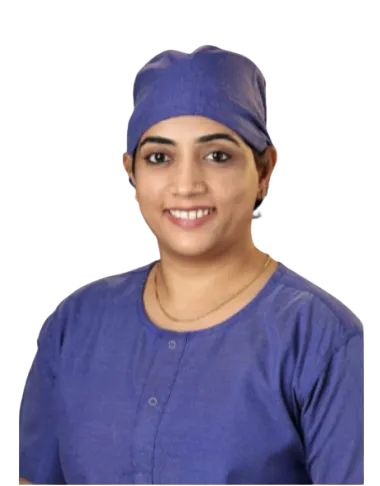
Dr. Fathimunissa M.A. is widely regarded as the best gynecologist in Chennai for women seeking both routine gynaecological care and advanced fertility treatment. With over 20+ years of dedicated practice in women’s reproductive health, she has guided thousands of couples through their fertility journey — from initial diagnosis to successful pregnancy.
She holds a postgraduate degree in Obstetrics & Gynaecology and has undergone advanced training in assisted reproductive technologies, including IVF, ICSI, and minimally invasive gynaecological procedures. Her clinical background spans high-risk pregnancies, complex infertility cases, and advanced fertility treatments that require both technical skill and thoughtful patient care — the kind of range that patients look for when searching for the best gynecologist in Chennai.
Dr. Fathimunissa also serves as a visiting consultant at MGM Hospitals ,Mehta Hospitals & Vijaya Hospitals, Chennai. As one of the most trusted names among fertility and gynaecological specialists in the city, she brings together medical precision and genuine compassion — two qualities that matter most when fertility and women’s health are involved.
Areas of Specialisation
Dr. Fathimunissa has 20 years of experience and expertise in the following fields
- Infertility treatment- Female infertility &Male infertility
- IVF in vitro fertilisation
- IUI Intra uterine insemination
- Ovulation Induction
- ICSI Intra cytoplasmic sperm injection
- Fertility Care
- Pregnancy care
- Antenatal ultrasound scan
- PCOS /PCOd treatment
- Endometriosis treatment
- Fibroid uterus treatment
- Menstrual Irregularities
- Laparoscopic Gynaecology procedures
- Hysteroscopy.
- Adolescent gynaecology
- Menopausal Care.
- Fibroid Uterus management
- Menstrual irregularities
Her ability to manage both common and complex cases under one roof means patients do not have to move between multiple specialists or clinics, which is one reason she is consistently ranked among the best gynecologists in Chennai by patients and referring doctors alike.
Why Patients Trust Dr. Fathimunissa
Trust is built over time — and for the best gynecologist in Chennai, it has been built one patient at a time over 20+ years. Patients returning to Fatima IVF often mention the same things: she listens without rushing, she explains options clearly without using confusing medical language, and she is honest about what is realistic for each individual situation. That kind of transparency is rare and deeply valued — especially in fertility care, where emotions run high.
She does not follow a one-treatment-fits-all approach. Every couple who walks through the door at Fatima IVF is assessed individually, and every treatment plan is built around their specific medical history, test results, and personal circumstances — the personalised standard patients expect from the best gynecologist in Chennai.
Membership
- Invited Faculty for various National conferences on Infertility
- OGSSI Obstetrics &Gynaexology Society of South India
- FOGSI Federation of Obstretics & Gynaecology Society of India
- ISAR
- TAPISAR :Executive Committee Member.
- PCOS Society .
- AMASI : Association of Minimal Access Surgeons of India
- TNMC. Tamilnadu Medical Council
Why Patients Choose Dr. Fathimunissa for PCOS Care
Women who come to Dr. Fathimunissa often say the same things. She actually listens. She explains things in a way that makes sense. She does not make you feel judged about your weight or your symptoms. She gives you a plan and she follows through on it. For women who have been to multiple doctors and received conflicting advice or no real answers, this kind of care is not just medically valuable. It is a genuine relief.
She is recognised as one of the most trusted PCOS treatment doctor in Chennai because she addresses not just the hormones but the whole person. The emotional impact, the lifestyle realities, the fertility goals, the long term health risks. All of it comes into the conversation.
Her Approach to PCOS Treatment
Dr. Fathimunissa believes that no two women with PCOS are the same, and treatment should reflect that. She does not apply a standard protocol to every patient. Instead she builds a treatment plan based on your specific hormone profile, your metabolic health, your symptoms, your fertility goals, and your daily life.
She also believes in honesty. If something is going to take time, she will tell you that. If a particular treatment option is not right for your situation, she will explain why and offer what is. Women who come to her leave knowing exactly what is happening in their body and exactly what is being done about it.
How to Choose the Best PCOS Specialist in Chennai
Qualifications and Experience
Look for a gynecologist with specific training and years of hands-on experience in hormone disorders, not just general obstetrics. Dr. Fathimunissa has spent years treating PCOS cases across different age groups, from teenagers to women planning pregnancy later in life. Her experience means she has seen the condition present in many different ways, which shapes how she reads your reports. A trusted PCOS Specialist in Chennai should be able to explain her reasoning clearly, not just prescribe and move on.
Approach to PCOS Diagnosis and Treatment
A thoughtful specialist does not rely on one test alone. Dr. Fathimunissa combines your symptom history, blood work, and scan findings before settling on a diagnosis, since PCOS can look similar to thyroid or other hormonal issues. She also checks in on lifestyle factors like sleep and stress, which genuinely affect hormone balance. This layered approach reduces the chance of a missed or incorrect diagnosis.
Availability of Comprehensive PCOS Care
Good PCOS care usually needs more than one visit, so it helps to choose a clinic that offers diagnosis, treatment, and follow-up under one roof. The clinic is a convenient choice for anyone searching for a PCOS Specialist in Anna Nagar, and it is just as accessible for someone searching for a PCOS Specialist in Padi, since the location sits within comfortable travel distance. Patients from Triplicane also visit regularly, often searching for a PCOS Specialist in Triplicane who they can see for both diagnosis and long-term follow-up without switching clinics. This continuity matters, since PCOS management is rarely a one-time fix.
Patient Reviews and Reputation
Word of mouth still counts for a lot in women’s health, since patients tend to be honest about how they were treated and heard. Many patients mention feeling comfortable asking questions during their visits, which matters when discussing personal symptoms. A steady flow of returning patients and referrals is usually a better sign than any single review. It’s worth asking around or checking recent feedback before your first visit.
PCOS Diagnosis and Evaluation in Chennai
Medical History and Physical Examination
The first step is always a detailed conversation about your cycle history, family history, and any symptoms you have noticed. Dr. Fathimunissa also does a physical check for signs like acne, hair growth patterns, and weight distribution, since these give useful clues. This first consultation with a PCOS Specialist in Chennai often narrows down what tests are actually needed, saving you from unnecessary ones. It also gives her a baseline to compare against at future visits.
Hormonal and Blood Tests
Blood tests usually check hormones like LH, FSH, testosterone, and thyroid levels, along with fasting insulin and glucose. These numbers help confirm whether PCOS is the cause of your symptoms or if something else, like a thyroid issue, is involved. Results are explained in plain terms during your follow-up, not just handed over as a printout. Depending on your history, a few additional tests may be added to rule out other conditions.
Ultrasound for PCOS
A pelvic ultrasound checks the size of the ovaries and looks for the small follicles often associated with PCOS. It is a quick, painless scan that adds important visual confirmation alongside your blood work. Dr. Fathimunissa walks patients through what the scan shows in simple terms, rather than leaving them to interpret a report alone. This scan is usually repeated only if your treatment plan changes significantly.
Assessing Insulin Resistance and Metabolic Health
Many women with PCOS also have some degree of insulin resistance, which affects weight, energy, and long-term health if left unaddressed. Checking fasting insulin and glucose levels early helps shape a more complete treatment plan. This step is often skipped elsewhere, but it can make a real difference in how symptoms are managed over time. Addressing insulin resistance early can also make other symptoms, like irregular periods, easier to treat.
PCOS Treatment Options Offered by Specialists
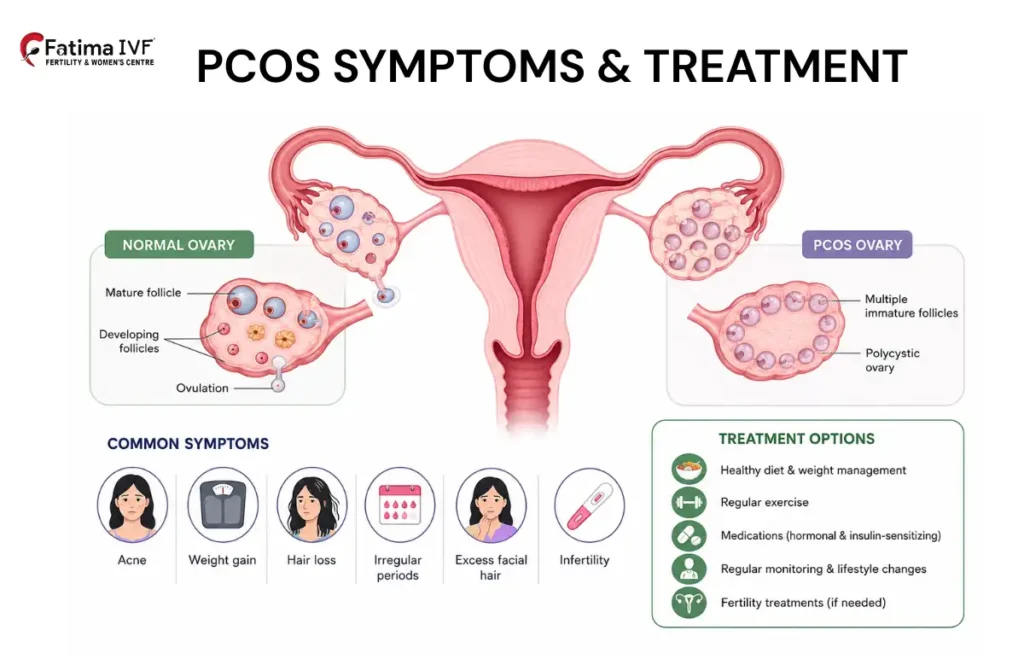
Lifestyle and Dietary Management
Diet and daily habits are usually the first line of treatment, since even small changes can improve hormone balance. Helpful adjustments include:
- Eating regular, balanced meals instead of skipping meals
- Reducing refined sugar and processed snacks
- Adding more fibre through vegetables, whole grains, and legumes
- Building in 30 minutes of movement most days
- Prioritising consistent sleep timings
These changes are not about strict dieting; they are about steady, sustainable habits that support hormone health over time.
Medications for PCOS Symptoms
When lifestyle changes alone are not enough, medication can help manage specific symptoms like irregular cycles, acne, or excess hair growth. The choice of medicine depends on your age, symptoms, and whether you are trying to conceive. Dr. Fathimunissa reviews these options with each patient individually, since a plan for a teenager looks very different from one for a woman preparing for pregnancy. Medication is usually paired with lifestyle changes rather than used alone.
Treatment for Irregular Periods
Irregular periods are one of the most common reasons women seek out a PCOS Specialist in Chennai, and treatment usually starts with understanding the underlying hormone imbalance. Options range from lifestyle changes to hormonal medication that helps regulate the cycle. Regular periods are not just about convenience; they also protect the uterine lining over the long term. Follow-up visits help track whether the chosen approach is actually working.
PCOS Treatment for Fertility and Pregnancy
For women trying to conceive, PCOS treatment often shifts focus toward supporting regular ovulation. This might involve medication, monitored cycles, or a referral for fertility support if needed. Dr. Fathimunissa works closely with patients through this process, adjusting the plan based on how the body responds each cycle. Many women with PCOS do go on to conceive successfully with the right guidance and patience.
Managing Acne and Excess Hair Growth
These symptoms can affect confidence just as much as physical health, so they are taken seriously as part of treatment. Common approaches include:
- Hormonal medication to reduce androgen levels
- Topical treatments for acne alongside a regular skincare routine
- Hair removal methods recommended alongside medical treatment, not as a replacement for it
Results take time, usually a few months, so patience alongside consistent treatment matters here.
PCOS and Fertility Treatment in Chennai
How PCOS Can Affect Fertility
PCOS can disrupt regular ovulation, which makes it harder to predict fertile days and, in some cases, harder to conceive. This does not mean pregnancy is impossible; it simply means the process may need medical support to work smoothly. Understanding this early, ideally with guidance from a PCOS Specialist in Chennai, helps couples plan realistically instead of feeling caught off guard later. Many women with PCOS have healthy pregnancies once ovulation is properly supported.
Ovulation Induction for PCOS
Ovulation induction uses medication to encourage the ovaries to release an egg on a more predictable schedule. Cycles are monitored closely through scans and hormone checks to track how the body is responding. Dr. Fathimunissa adjusts dosage and timing based on these results rather than following a fixed protocol for everyone. This personalised monitoring improves the chances of a successful cycle.
When to Consider Fertility Treatment
If you have been trying to conceive for over a year, or over six months if you are above 35, it is worth having a focused fertility conversation. For women with PCOS specifically, earlier evaluation is often recommended since ovulation issues are common. Getting evaluated early does not mean jumping straight to advanced treatment; it simply means understanding your options sooner. This gives you and your partner more time to make informed decisions together.
PCOS Management During Pregnancy
Women with PCOS who do conceive are usually monitored a little more closely, since there is a slightly higher chance of gestational diabetes or blood pressure changes. This does not mean the pregnancy is automatically high-risk; it simply means extra check-ins are built into the care plan. Dr. Fathimunissa coordinates this monitoring alongside routine prenatal care, so nothing feels disconnected. Most women with PCOS go on to have smooth, healthy pregnancies with this kind of attentive care.
Why Consult a PCOS Specialist Instead of Self-Treating?
Importance of Accurate Diagnosis
PCOS shares symptoms with other hormonal conditions, so self-diagnosing from online searches can lead you down the wrong path. A proper evaluation from a PCOS Specialist in Chennai rules out look-alike conditions and confirms what is actually going on in your body. This accuracy matters because treatment for PCOS is different from treatment for, say, a thyroid disorder. Getting the diagnosis right the first time saves months of trial and error.
Personalized PCOS Treatment Plans
No two women experience PCOS the same way, so a plan built around your specific symptoms, age, and goals works better than a one-size-fits-all approach. Dr. Fathimunissa adjusts treatment as your body responds, rather than sticking rigidly to an initial plan. This flexibility is something self-treatment simply cannot offer. Regular check-ins allow small adjustments before minor issues become bigger ones.
Long-Term Management of PCOS
PCOS is a long-term condition, so ongoing care matters more than a single round of treatment. Ongoing monitoring helps catch related concerns, like insulin resistance or cholesterol changes, before they become bigger problems. Dr. Fathimunissa encourages periodic follow-ups even once symptoms improve, since hormone levels can shift again over time. This steady, long-term relationship is often what makes the biggest difference in how well PCOS is managed over the years.
Conclusion
PCOS is common, manageable, and does not have to control your daily life once you have the right support in place. With a clear diagnosis, a personalised plan, and steady follow-up care, most women see real improvement in their symptoms and overall wellbeing. If you have been noticing signs like irregular periods, acne, or unexplained weight changes, it is a good time to get evaluated rather than wait. Dr. Fathimunissa and her team are here to guide you through diagnosis, treatment, and everything in between, one honest conversation at a time.