Best IVF Treatment in Chennai
Contents

If you have been trying to have a baby for months or years without success, you already know how exhausting this journey feels. The hope at the start of every cycle. The waiting. The disappointment. The conversations you have had with doctors, with each other, with yourself at 2 in the morning when the worry feels loudest.

IVF treatment in Chennai has helped thousands of couples who were exactly where they are right now. Couples who had been told their chances were slim. Couples who had tried everything else. Couples who had almost given up. Today, many of them are parents.

What is IVF Treatment?

IVF stands for In Vitro Fertilisation. In simple terms, it is a process where fertilisation happens outside the body in a carefully controlled laboratory environment, rather than inside the fallopian tube as it would naturally.

The doctor collects eggs from the woman’s ovaries and combines them with sperm in the lab. When fertilisation occurs and an embryo develops, it is placed back into the uterus where it can implant and grow into a pregnancy.

That is the basic outline. But the reality of IVF is more nuanced, more personal, and more carefully managed than any simple description captures.

How Does IVF Work Inside the Body?

The human body naturally produces and releases one egg per menstrual cycle. In IVF, medicines are used to gently stimulate the ovaries to produce multiple eggs at once. This increases the number of embryos available, which in turn improves the chances of at least one successfully implanting in the uterus.

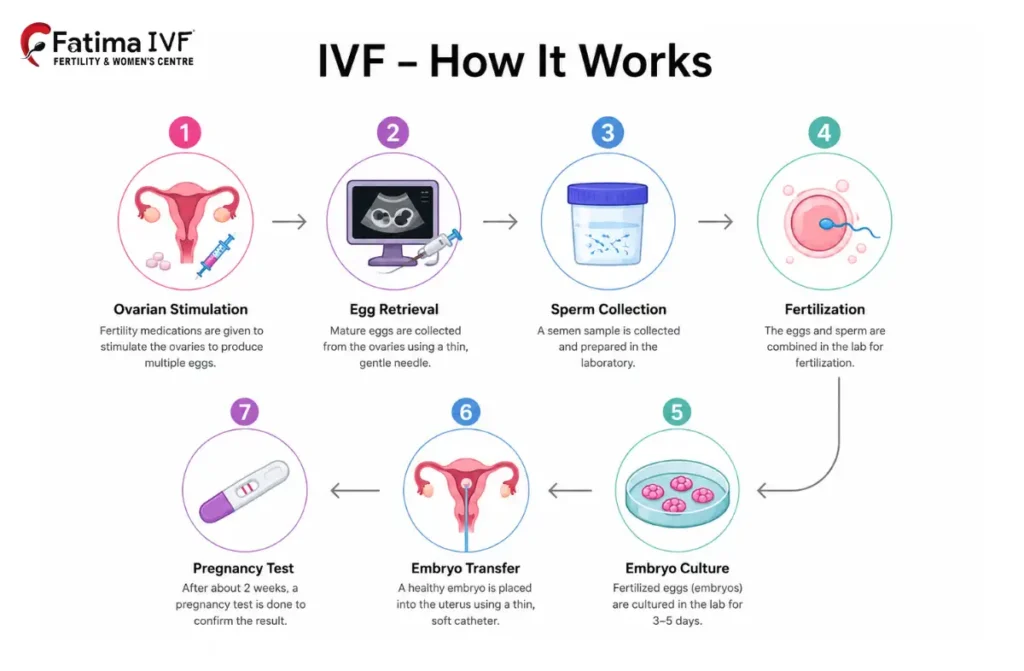
Once the eggs are mature, they are retrieved through a minor procedure and taken to the embryology lab. There, the best quality sperm is selected and combined with each egg. Over the next few days, the fertilised eggs develop into embryos under close observation. The healthiest embryo is then transferred into the uterus, and approximately two weeks later a blood test confirms whether pregnancy has occurred.

Every single step of this process is monitored, adjusted, and guided by your fertility specialist based on how your body is responding. This is not a one size fits all procedure. It is one of the most individually tailored medical treatments available.

IVF Treatment in Chennai

How is IVF Different from Natural Conception?

In natural conception, one egg travels down the fallopian tube and is fertilised by sperm there. For this to work, the tubes must be open, sperm must be able to reach the egg, ovulation must occur regularly, and the fertilised egg must successfully travel to and implant in the uterus.

IVF bypasses all of these steps. It does not rely on open tubes. It does not depend on sperm travelling a long distance. It removes the uncertainty of whether fertilisation happened and gives your medical team direct visibility into every stage of the process.

For couples where any one of these natural steps is blocked, damaged, or unreliable, IVF creates a pathway that simply did not exist before.

Who Needs IVF Treatment in Chennai?

IVF is not a first step for most couples. It usually comes after other treatments have been tried, or after a diagnosis that makes it clear that natural conception is unlikely without significant medical help.

What matters is not how long you have been trying. What matters is understanding what is preventing pregnancy and whether IVF is the right solution for your specific situation.

Medical Conditions That Lead to IVF

The most common reasons couples are recommended IVF include blocked or damaged fallopian tubes, which prevent eggs and sperm from meeting. Endometriosis, which can affect egg quality, tube function, and the uterine environment. PCOS, where irregular or absent ovulation makes natural conception very difficult. Low AMH or diminished ovarian reserve, where the number of available eggs is reduced. Uterine fibroids or structural issues that interfere with implantation. And recurrent pregnancy loss, where conception occurs but the pregnancy does not continue.

In each of these situations, IVF either bypasses the problem entirely or creates conditions in which a successful pregnancy becomes significantly more achievable.

When Should a Couple Consider IVF?

The general guideline is that couples under 35 who have been trying to conceive for one year without success should seek a fertility evaluation. For couples over 35, that window shortens to six months. For anyone with a known fertility condition, it is worth speaking to a specialist even sooner.

But guidelines aside, there is no shame in seeking answers earlier than the textbook says. If something feels wrong, or if you have a known diagnosis, you do not need to wait a year before asking for help. Early consultation does not commit you to treatment. It gives you information. And information is the one thing that makes every step of this journey easier to navigate.

IVF for Male Infertility

Infertility is not only a female issue. In roughly half of all cases where a couple struggles to conceive, a male factor is involved either alone or alongside a female factor. Low sperm count, poor sperm motility, abnormal sperm shape, or in some cases a complete absence of sperm in the ejaculate are all conditions that affect fertilisation.

IVF combined with a technique called ICSI, which stands for Intracytoplasmic Sperm Injection, can address most forms of male infertility directly. Instead of leaving fertilisation to chance, a single carefully selected sperm is injected directly into each egg. For couples where male infertility has been the barrier, this approach has transformed outcomes that would previously have been considered impossible.

Meet Dr. Fathimunissa – Leading IVF Specialist in Chennai

Dr. Fathimunissa

When you are searching for the best IVF treatment in Chennai, you are not just searching for a procedure. You are searching for a doctor who will be honest with you about what is possible, who will treat you as a person and not a case number, and who has the clinical depth to manage whatever complexity your situation involves.

Dr. Fathimunissa M A has been that doctor for thousands of couples across Chennai for over 18+ years. She specialises in reproductive medicine, fertility treatments, and gynaecology with a particular focus on cases that other clinics have found difficult. Her patients describe her as someone who listens without rushing, explains without overwhelming, and never makes them feel judged about how long it took them to seek help.
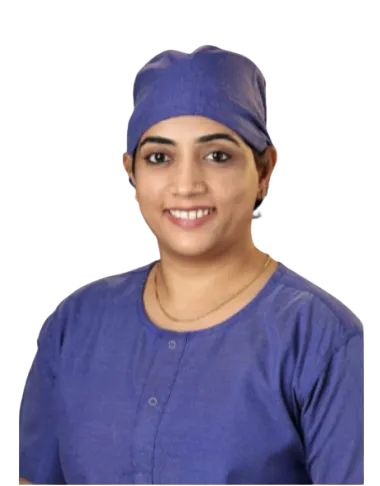
She practices at Fatima Fertility Centre with branches in Anna Nagar and Triplicane, and also consults as a visiting specialist at MGM Hospitals and Mehta Hospitals. Her 18+ years of clinical experience spans the full spectrum of fertility challenges, from straightforward IVF cycles to complex cases involving low AMH, repeated implantation failure, and advanced maternal age.

What her patients remember most is not just that she helped them conceive. It is that she made them feel genuinely supported through one of the hardest experiences of their lives.

⭐ Patient Ratings
Google: 4.9 ★ | Justdial: 5 ★ | Practo: 5 ★

IVF Treatment Process Step by Step

One of the biggest sources of anxiety about IVF is not knowing what to expect. When you understand each step clearly, the process becomes less frightening and more manageable. Here is exactly what happens from your first consultation to your pregnancy test.

Step 1 – Initial Consultation and Fertility Evaluation

Before any treatment begins, Dr. Fathimunissa will spend time understanding your complete fertility history. This includes your menstrual pattern, any previous pregnancies, any diagnoses you have received, and any treatments you have already tried.

Both partners undergo a thorough evaluation. For the woman this includes hormone blood tests, an AMH test to assess ovarian reserve, a pelvic ultrasound to examine the ovaries and uterus, and an assessment of the fallopian tubes if relevant. For the man this includes a semen analysis evaluating sperm count, motility, and morphology.

This evaluation is not just a formality. It is the foundation of everything that follows. The results determine your personalised IVF protocol, the medications used, the monitoring schedule, and which additional techniques may be needed.

Step 2 – Ovarian Stimulation

Once your protocol is designed, you will begin a course of injectable hormonal medications to stimulate your ovaries to develop multiple follicles, each of which may contain a mature egg. This phase typically lasts 10 to 14 days.

During this time you will attend the clinic for regular monitoring scans and blood tests. These allow Dr. Fathimunissa to track how your ovaries are responding and adjust your medication dose if needed. The goal is to grow an optimal number of mature follicles without over stimulating the ovaries.

Some women feel mild bloating or discomfort during this phase. It is generally manageable and your team will advise you on what to expect and what to watch for.

Step 3 – Egg Retrieval

When the follicles reach the right size, a trigger injection is given to finalise egg maturation. Approximately 36 hours later, egg retrieval takes place. This is a minor procedure performed under light sedation, so you will be comfortable and unaware throughout.

Using ultrasound guidance, a thin needle is passed through the vaginal wall into each follicle to collect the eggs. The procedure takes around 20 to 30 minutes. Most women feel fine within a few hours and can return home the same day.

The eggs are immediately transferred to the embryology lab where they are assessed for maturity and quality.

Step 4 – Fertilisation in the Lab

On the same day as egg retrieval, a sperm sample is collected and prepared. In standard IVF, the prepared sperm is placed together with each egg and fertilisation occurs naturally in the lab dish overnight. Where sperm quality is a concern, ICSI is used instead, with a single sperm injected directly into each egg.

The following morning your embryologist will assess how many eggs have fertilised successfully. Dr. Fathimunissa’s team will call you with this update so you know what is happening at every stage.

Step 5 – Embryo Development and Selection

Over the next three to five days, the fertilised eggs develop into embryos in the lab. Your embryology team observes this development closely, assessing the quality and growth of each embryo.

By day three, embryos are at the cleavage stage. By day five or six, the best embryos reach the blastocyst stage, which is when they are most ready for transfer and have the highest potential for successful implantation. Reaching the blastocyst stage before transfer is associated with better outcomes for many patients.

If genetic testing has been recommended, a small number of cells may be biopsied from each blastocyst at this stage for analysis before transfer.

Step 6 – Embryo Transfer

Embryo transfer is a simple, painless procedure that does not require sedation for most women. It feels similar to a cervical smear. Using a thin catheter guided by ultrasound, the selected embryo is gently placed into the uterus.

After transfer, you will rest briefly at the clinic and then go home. Normal light activity is encouraged. There is no need for complete bed rest, though you will be advised to avoid strenuous exercise for the two week wait period.

Step 7 – Pregnancy Test and Follow Up

Approximately 14 days after embryo transfer, a blood test measures your HCG level to determine whether implantation has occurred and pregnancy has begun. A blood test is more reliable than a home urine test at this early stage.

If the result is positive, you will begin a monitoring programme to confirm the pregnancy is developing healthily. If the result is not positive, Dr. Fathimunissa will review your cycle carefully, identify any factors that can be adjusted, and discuss the next steps with you directly and compassionately.

IVF Success Rate at Fatima Fertility Centre

Success rate is one of the first things couples ask about, and it is a completely reasonable question. But it deserves an honest answer rather than a headline number that sounds impressive without context.

IVF success rates vary significantly based on a woman’s age, the cause of infertility, the quality of eggs and sperm, the number of embryos available, and the clinical decisions made throughout the cycle. A clinic that treats only younger, straightforward cases will naturally report higher average success rates than one that also takes on complex, previously failed, or older patient cases.

At Fatima Fertility Centre, Dr. Fathimunissa treats the full spectrum of cases including those others have found difficult. Her success rates reflect real clinical outcomes across real patients, and she will give you an honest, personalised assessment of what is achievable in your specific situation.

Every couple who walks into our clinic asks the same question. What are my chances? It is the most honest and important question you can ask. Here is a straightforward answer.

IVF Success Rate by Age Group

Here is a simple guide to what IVF success typically looks like at different ages:

  • Under 35: This is where success rates are highest. Most well equipped centres see live birth rates of around 40 to 50 percent per cycle in this age group.
  • 35 to 37:  Success rates remain reasonably good but do begin to reduce compared to younger age groups.
  • 38 to 40: Success per cycle is lower but still very much worth pursuing. Many women in this group do conceive through IVF with the right protocol.
  • Above 40 Success rates are lower and this is where an honest one to one conversation with Dr. Fathimunissa matters most. In some cases, considering donor eggs may significantly improve the chances of a successful pregnancy. She will walk you through this conversation with full transparency and no pressure.

IVF Treatment Cost in Chennai

Cost is one of the most searched questions around IVF, and it deserves a straight answer. The IVF treatment cost in Chennai varies depending on several factors, and being clear about what those factors are helps couples plan realistically without being caught off guard.

What is Included in the IVF Treatment Cost?

A standard IVF cycle at a reputable centre typically includes the initial fertility evaluation, all monitoring consultations and scans during stimulation, the egg retrieval procedure, embryology laboratory fees, the embryo transfer procedure, and post transfer follow up. Medications for ovarian stimulation are usually charged separately as they vary significantly from patient to patient based on the protocol required.

At Fatima Fertility Centre, you will receive a transparent breakdown of costs before treatment begins. There are no hidden charges and no surprises. If additional procedures are recommended, they will be explained clearly along with why they are being suggested and what they cost.

Factors That Influence the Total Cost

The total cost of IVF treatment in Chennai varies based on whether standard IVF or ICSI is needed, how many monitoring visits are required, whether advanced techniques like genetic testing or assisted hatching are recommended, how many cycles are needed, and whether frozen embryo transfers from a previous cycle are used.

Couples should also factor in the cost of medications, which can range considerably depending on your ovarian reserve and the stimulation protocol used.

Advanced IVF Treatments at Fatima Fertility Centre

IVF at Fatima Fertility Centre is not a single fixed procedure. It is a range of techniques that can be combined and customised based on what each couple specifically needs. The following advanced treatments are available alongside standard IVF.

ICSI – When Sperm Quality Is a Concern

Intracytoplasmic Sperm Injection involves injecting a single selected sperm directly into each egg rather than leaving fertilisation to occur naturally. It is recommended when sperm count is very low, sperm motility is poor, sperm morphology is significantly abnormal, or when previous IVF cycles have had unexpectedly poor fertilisation rates. ICSI has dramatically changed outcomes for couples where male infertility was previously seen as an insurmountable barrier.

Laser Assisted Hatching for Better Implantation

Before an embryo can implant in the uterine wall, it must break out of its outer shell, a process called hatching. In some embryos, particularly those from older eggs or after freezing and thawing, this shell may be thicker than ideal. Laser assisted hatching creates a small opening in the shell to help the embryo emerge more easily and improve implantation success. It is a quick, precise procedure performed in the embryology lab before transfer.

Blastocyst Transfer for Improved Success

Allowing embryos to develop to the blastocyst stage, day five or six, before transfer rather than transferring on day three selects for the embryos with the strongest developmental potential. Not all embryos make it to the blastocyst stage, which is actually useful information as it identifies the ones most likely to succeed. Blastocyst transfer is associated with higher implantation rates in suitable cases.

Frozen Embryo Transfer

If a fresh IVF cycle produces more good quality embryos than are transferred in the first attempt, the remaining embryos can be carefully frozen for future use. Frozen embryo transfer cycles are less medically intensive than a full IVF cycle and offer couples additional attempts without repeating the entire stimulation and retrieval process. In many cases, frozen transfers produce excellent results.

PGT-A – Genetic Testing of Embryos

Preimplantation Genetic Testing for Aneuploidies analyses the chromosomal makeup of embryos before transfer. An embryo with the correct number of chromosomes, called a euploid embryo, is far more likely to implant successfully and less likely to result in miscarriage. PGT-A is particularly valuable for women over 37, couples with a history of recurrent pregnancy loss, or those who have had multiple failed IVF cycles. It identifies the embryo most likely to result in a healthy live birth.

Egg and Sperm Freezing

For women who are not ready to attempt pregnancy now but want to preserve their fertility for the future, egg freezing allows eggs to be collected and stored at their current quality. Sperm freezing is available for men who want to preserve fertility before medical treatment, surgery, or for other personal reasons. Both are offered at Fatima Fertility Centre with proper counselling and long term storage options.

Our IVF Lab and Technology

The quality of an IVF outcome is not determined only by the doctor in the consultation room. It is equally determined by what happens in the embryology lab. The environment in which eggs, sperm, and embryos are handled, cultured, and developed has a direct impact on how well they survive and grow.

Advanced Embryology Laboratory

At Fatima Fertility Centre, the embryology laboratory is equipped and maintained to the standards required for safe, successful IVF. Temperature, humidity, air quality, and culture media are all carefully controlled to replicate as closely as possible the conditions inside the human body. The embryologists who work in the lab are trained specialists whose skill and attention to detail directly affect your embryo quality.

Continuous Embryo Monitoring

Embryo development is observed throughout the culture period. This monitoring allows the embryology team to identify which embryos are developing normally and at the right pace, and to select the one most likely to result in successful implantation. Any abnormal development is noted and taken into account in embryo selection decisions.

Why Lab Quality Directly Affects Your IVF Outcome

Two clinics can use the same stimulation protocol and the same medications and still get very different results. The difference often lies in the embryology lab. The stability of the lab environment, the quality of the culture media, the skill of the embryologists, and the precision of the handling process all influence whether embryos develop to their full potential. When choosing a clinic for trusted IVF treatment in Chennai, the lab is not a background detail. It is central to your outcome.

Why Choose Fatima Fertility Centre for IVF in Chennai?

There are many fertility clinics in Chennai. The question couples most often ask is not whether IVF is available near them. It is who they can truly trust with something this important.

Experienced Fertility Specialists

Dr. Fathimunissa brings 18+ years of dedicated experience in fertility and reproductive medicine to every consultation. She has managed cases across the full spectrum of fertility challenges including those that other clinics have struggled with. Her clinical judgment, built over thousands of cases, is the foundation of the care you receive at Fatima Fertility Centre.

Personalised Treatment for Every Couple

No two couples arrive at IVF with the same history, the same diagnosis, or the same priorities. At Fatima Fertility Centre, your treatment plan is built around your specific test results, your body’s response, your fertility goals, and your personal circumstances. You are not fitted into a standard protocol. The protocol is designed around you.

Emotional and Psychological Support

IVF is emotionally intense. The hope, the anxiety, the waiting, and the uncertainty take a genuine toll. At Fatima Fertility Centre, the team understands this not as a side note to treatment but as a central part of the care you need. You will be supported through every stage, your questions will always be answered, and you will never feel alone in this process.

Accreditations and Certifications

Fatima Fertility Centre operates in compliance with the regulatory guidelines governing assisted reproductive technology in India. The centre’s registration and clinical standards reflect a commitment to safe, ethical, and evidence based fertility care.

Transparent and Ethical Care

You will always know exactly what you are being recommended and why. If a treatment is not right for your situation, Dr. Fathimunissa will tell you that. If a second opinion would help you feel more confident, she will encourage it. The goal is always your best possible outcome, not the most complex or expensive treatment plan.

IVF Patient Success Stories

Dhana Lakshmi

Our experience with Dr.fatima ivf clinic has been truly wonderful and grateful to dr.Fatima mam for her wonderful care and support. She makes me comfortable and confident throughout the process. The entire clinical staff and receptionist is very cordial and supportive.they will response at any time.
I will recommend Dr.fatima ivf clinic to anyone who look for a very good treatment.

Dhilani Maheandhran

After going through two miscarriages, my pregnancy journey was honestly filled with fear and anxiety. I was just looking for a place where I could feel safe and cared for and coming to Fatima IVF truly changed everything for me. From my very first visit, Dr. Fatima and her team made me feel comfortable and understood. They didn’t treat me like just another patient they really took the time to listen and support me emotionally. Every scan and every step of the process was explained clearly, which helped calm me down so much. Whenever I felt anxious (which happened quite often), they were always patient and reassuring. Read more.

Conclusion

The decision to pursue IVF is not a small one. It comes after months or years of hoping, trying, testing, and wondering. It carries emotional weight that people who have not been through infertility can rarely fully understand. What you deserve at this point in your journey is a clinic that treats you as an individual, a doctor who is honest with you about what is possible, and a team that supports you not just through the medical steps but through the emotional ones too.

At Fatima Fertility Centre, Dr. Fathimunissa and her team have spent 18+ years doing exactly that. Delivering the best IVF treatment in Chennai is not just a claim. It is built into every consultation, every monitoring visit, every embryology decision, and every conversation had with couples who walked in carrying hope and needed someone to help them carry it forward.

If you are ready to take the next step, or even just ready to ask your first Book Appointment, the team at Fatima Fertility Centre is here for you.

Frequently Asked Questions

There is no fixed answer to this. Some couples conceive on the first cycle. Others need two or three attempts. Statistical success rates are usually quoted per cycle, but cumulative success rates across multiple cycles are often significantly higher. Dr. Fathimunissa will give you a realistic assessment based on your test results and will review each cycle carefully to adjust the approach if needed.

The injections during ovarian stimulation can be mildly uncomfortable but are generally well tolerated. The egg retrieval procedure is performed under sedation so you will not feel it during the procedure. Some women experience cramping and bloating after retrieval, similar to a heavy period, which resolves within a day or two. The embryo transfer itself is usually painless and takes only a few minutes.

Success rates at Fatima Fertility Centre reflect real clinical outcomes across the full range of patients Dr. Fathimunissa treats. Rather than quoting a single headline figure, she will give you a personalised success probability based on your age, ovarian reserve, diagnosis, and treatment history at your first consultation. This is a more honest and more useful approach than a clinic wide average that may not reflect your individual situation at all.

Yes. PCOS is one of the most common conditions treated with IVF and outcomes are generally very good with appropriate management. The main consideration is careful stimulation to avoid ovarian hyperstimulation. Dr. Fathimunissa has extensive experience managing IVF in women with PCOS and uses protocols designed to keep stimulation safe while maximising the number of good quality eggs retrieved.

From the start of stimulation injections to the pregnancy test, a single IVF cycle typically takes around four to six weeks. The stimulation phase lasts approximately 10 to 14 days, egg retrieval occurs on one day, embryo development takes three to five days in the lab, and after transfer there is a two week wait before the pregnancy test. Your overall timeline from first consultation to completed cycle may be slightly longer depending on the investigations needed beforehand.

A balanced whole food diet rich in vegetables, fruit, lean protein, healthy fats, and complex carbohydrates supports hormonal health and overall fertility. Specific foods often recommended include leafy greens for folate, oily fish for omega 3 fatty acids, and foods that support insulin sensitivity which is particularly relevant for women with PCOS. Your team can provide specific dietary guidance tailored to your situation. Avoiding processed food, excessive caffeine, alcohol, and smoking during treatment is consistently recommended.

Coverage varies significantly between insurers and individual policies. Some health insurance plans in India now include fertility treatment coverage including IVF, while others do not or cover only certain aspects. It is worth reviewing your policy documents carefully and speaking directly with your insurer. The team at Fatima Fertility Centre can assist you in understanding what documentation is typically required and how to navigate the insurance process.

Standard IVF involves placing prepared sperm alongside eggs in a lab dish and allowing fertilisation to occur naturally. ICSI involves injecting a single selected sperm directly into each egg using a very fine needle. ICSI is recommended when sperm quality is significantly compromised, when previous IVF cycles have had poor fertilisation rates, or as a precaution in certain clinical situations. The stimulation, retrieval, and transfer process is the same in both cases. The difference lies only in how fertilisation occurs in the lab.

IVF is most successful for women under 35, where egg quality and ovarian reserve are typically at their best. Success rates decline gradually from 35 to 37, more noticeably from 38 to 40, and more significantly after 40. However, age is one factor among many and some women in their early forties achieve successful pregnancies with their own eggs, particularly when other fertility factors are favourable. If you are over 40 and considering IVF, an honest and detailed conversation with Dr. Fathimunissa about your personal situation, including whether your own eggs or donor eggs give you the best chance, is the most valuable first step.

Learn More