

Fertility is the natural ability to conceive a child, and it depends on both partners, not just one. Good fertility guidance for couples looks at the health of the woman’s eggs and reproductive organs alongside the health of the man’s sperm, since both play an equal role in conception. Some couples conceive within a few months of trying, while others need more time or a little extra support along the way. Understanding fertility as a shared journey, rather than a one-sided issue, helps couples approach the process with patience and teamwork.
When Should Couples Start Thinking About Fertility?
It helps to start thinking about fertility as soon as you begin planning a family, even before you actively try to conceive. A general health check for both partners, a review of daily habits, and an honest conversation about timelines can make the path smoother later on. Fertility naturally changes with age, so couples in their early thirties or older may benefit from thinking about it a little earlier than couples in their twenties. Starting this conversation early is not about worry, it is simply good planning.
Common Factors That Affect Fertility
Many everyday factors can influence how easily a couple conceives. Being aware of them early makes it easier to address anything that needs attention.
- Age of both partners, especially the woman’s age
- Body weight, both being underweight and overweight
- Underlying health conditions such as thyroid issues or PCOS
- Smoking, alcohol use, and high stress levels
- Timing and frequency of intercourse around ovulation
Understanding Fertility in Men and Women
Female Fertility Factors
A woman’s fertility depends mainly on regular ovulation, healthy fallopian tubes, and a uterus that can support a pregnancy. Conditions like polycystic ovary syndrome, endometriosis, or blocked tubes can make conception take longer, though many of these can be managed with the right care. Hormone levels also play a big part, since they control when an egg is released each month. A woman’s egg count and egg quality naturally decline over time, which is why age is such an important piece of the fertility picture.
Male Fertility Factors
Male fertility depends on healthy sperm count, good sperm movement, and normal sperm shape. Lifestyle habits such as smoking, heavy drinking, tight clothing, or long exposure to heat can quietly lower sperm quality over time. Certain health conditions, past infections, or hormone imbalances can also play a role. Because male factors contribute to roughly half of all fertility challenges couples face, it is just as important for men to pay attention to their reproductive health as it is for women.
How Age Can Affect Fertility
Age affects fertility in both partners, though the impact is more pronounced in women. A woman’s egg supply and egg quality both decrease gradually after the early thirties, with a faster decline after age thirty-five. Men also see a gradual change in sperm quality with age, though the effect is usually slower and less predictable. Knowing how age fits into the picture helps couples make informed choices about timing and, if needed, when to seek support.
Lifestyle Factors That Influence Fertility
Daily habits add up over time and can shape fertility for both partners. Regular sleep, balanced meals, and moderate exercise support hormone balance, which in turn supports ovulation and sperm production. Chronic stress, poor sleep, and excessive caffeine can quietly work against these processes. Small, consistent changes to daily routines often make a bigger difference than any single major lifestyle overhaul.
How Couples Can Improve Their Fertility Naturally
Maintain a Healthy Diet
Good nutrition supports hormone balance and reproductive health for both partners. A few simple changes to your plate each day can make a real difference over a few months.
- Include leafy greens, whole grains, and seasonal fruit daily
- Add protein sources like lentils, eggs, fish, and nuts
- Choose healthy fats such as olive oil, ghee in moderation, and seeds
- Limit processed food, packaged snacks, and sugary drinks
- Stay well hydrated throughout the day
Exercise and Maintain a Healthy Weight
Regular, moderate exercise helps keep hormones balanced and supports a healthy weight, both of which matter for fertility. Thirty minutes of walking, yoga, or light strength training most days of the week is usually enough for most couples. Being significantly underweight or overweight can disrupt ovulation in women and lower sperm quality in men, so working toward a steady, healthy weight is worthwhile. Extreme exercise routines, on the other hand, can sometimes do more harm than good, so balance matters more than intensity.
Manage Stress and Prioritize Sleep
Stress and poor sleep affect the hormones that control ovulation and sperm production, so managing both is a meaningful part of fertility guidance for couples. Simple daily habits, such as a short walk, breathing exercises, or a wind-down routine before bed, can lower stress over time. Aiming for seven to eight hours of consistent sleep each night supports the body’s natural hormone rhythm. Couples who support each other through stressful periods, rather than facing them alone, often find the process easier to manage emotionally.
Avoid Smoking, Alcohol, and Other Harmful Substances
Smoking lowers fertility in both men and women by affecting egg quality, sperm quality, and hormone levels. Regular or heavy alcohol use can disrupt ovulation in women and reduce sperm count and movement in men. Recreational drug use and excessive caffeine intake can also work against conception. Cutting back on these substances, ideally together as a couple, is one of the most direct ways to support natural fertility.
Understanding the Fertile Window
How to Track Ovulation
The fertile window is the handful of days each month when conception is most likely, centered around ovulation. Many women track this using a calendar method, basal body temperature charting, or over-the-counter ovulation predictor kits that detect a hormone surge before ovulation. Cervical mucus changes, which become clearer and stretchier close to ovulation, are another useful natural sign to watch for. Using more than one method together usually gives a clearer picture than relying on just one.
Identifying the Best Time for Conception
For most women with a regular cycle, the fertile window falls roughly midway between periods, with ovulation itself lasting about twenty-four hours. Because sperm can survive inside the body for up to five days, the days leading up to ovulation are just as important as the day itself. This means the most fertile days are usually the two to three days before ovulation and the day of ovulation. Couples with irregular cycles may find it harder to predict this window and can benefit from tracking tools or guidance from a specialist.
How Often Should Couples Have Sex When Trying to Conceive?
Having intercourse every two to three days throughout the cycle gives couples a good chance of covering the fertile window without the pressure of precise timing. Some couples prefer to focus specifically on the days identified through ovulation tracking, which can also work well. What matters most is consistency rather than perfection, since sperm health is generally better maintained with regular rather than infrequent activity. Keeping this part of the process relaxed, rather than turning it into a strict schedule, tends to be easier for most couples emotionally.
When Should Couples Seek Fertility Guidance?
Signs That You May Need Fertility Support
Most couples do not need to worry after just a few months of trying, but certain signs are worth paying attention to.
- Irregular, very light, or absent periods
- Known history of pelvic infection, surgery, or endometriosis
- A partner with a known history of hernia surgery or hormone issues
- Difficulty conceiving after a year of regular, unprotected intercourse
- Repeated early pregnancy loss
How Long Should You Try Before Consulting a Specialist?
General fertility guidance for couples suggests trying naturally for about a year if the woman is under thirty-five, since most couples conceive within this time. For women aged thirty-five and above, it is reasonable to seek guidance after about six months, since time matters more at this stage. Couples with known health conditions, such as irregular cycles or a partner’s prior fertility issue, may want to consult a specialist sooner rather than waiting out the full window. There is no harm in an early consultation simply to understand where things stand.
Why Both Partners Should Be Evaluated
Fertility challenges are shared roughly equally between male and female factors, so it makes sense for both partners to be evaluated together from the start. Testing only one partner can miss half the picture and lead to unnecessary delays in finding the right next step. A joint evaluation also helps a specialist recommend the most suitable treatment path for the couple as a unit, rather than treating each partner separately. Approaching this as a team effort tends to reduce stress and keeps both partners equally informed.
Fertility Tests for Couples
Common Fertility Tests for Women
Fertility testing for women usually begins with a review of menstrual history along with blood tests to check hormone levels connected to ovulation. An ultrasound scan is often used to check the ovaries, count antral follicles, and look at the shape of the uterus. A hysterosalpingogram, a simple X-ray procedure, may be used to check whether the fallopian tubes are open. These tests together help build a clear picture of how the reproductive system is functioning.
Common Fertility Tests for Men
The main test for men is a semen analysis, which looks at sperm count, movement, and shape. This test is simple, non-invasive, and usually gives useful results within a day or two. If the results show any concerns, additional hormone blood tests or a physical examination may be recommended to understand the underlying cause. Because this test is quick and straightforward, it is often one of the first steps taken once a couple decides to seek fertility guidance.
Understanding Fertility Test Results
Test results are best understood together with a specialist, since numbers alone rarely tell the full story. A result outside the typical range does not always mean treatment is required, and sometimes simple lifestyle changes are enough to improve it. In other cases, results point clearly toward a specific next step, such as medication or a particular treatment. Discussing results as a couple, with clear explanations from your doctor, helps you both feel informed and involved in whatever comes next.
Fertility Treatment Options for Couples
Medications and Ovulation Support
For women who ovulate irregularly or not at all, oral or injectable medications can help stimulate the ovaries to release eggs more predictably. These medications are often the first line of treatment because they are relatively simple and can be combined with natural timing or a minor procedure. Your specialist will usually monitor the response with ultrasound scans and blood tests to adjust the dose as needed. Many couples achieve pregnancy with medication support alone, without needing further treatment.
Intrauterine Insemination (IUI)
Intrauterine insemination places specially prepared sperm directly into the uterus around the time of ovulation, giving sperm a shorter distance to travel. It is a relatively simple, low-cost procedure that is often recommended for mild male-factor issues, unexplained fertility challenges, or when ovulation medication alone has not worked. The procedure itself takes only a few minutes and does not usually require anesthesia. IUI is often tried for a few cycles before considering a more involved treatment option.
In Vitro Fertilization (IVF)
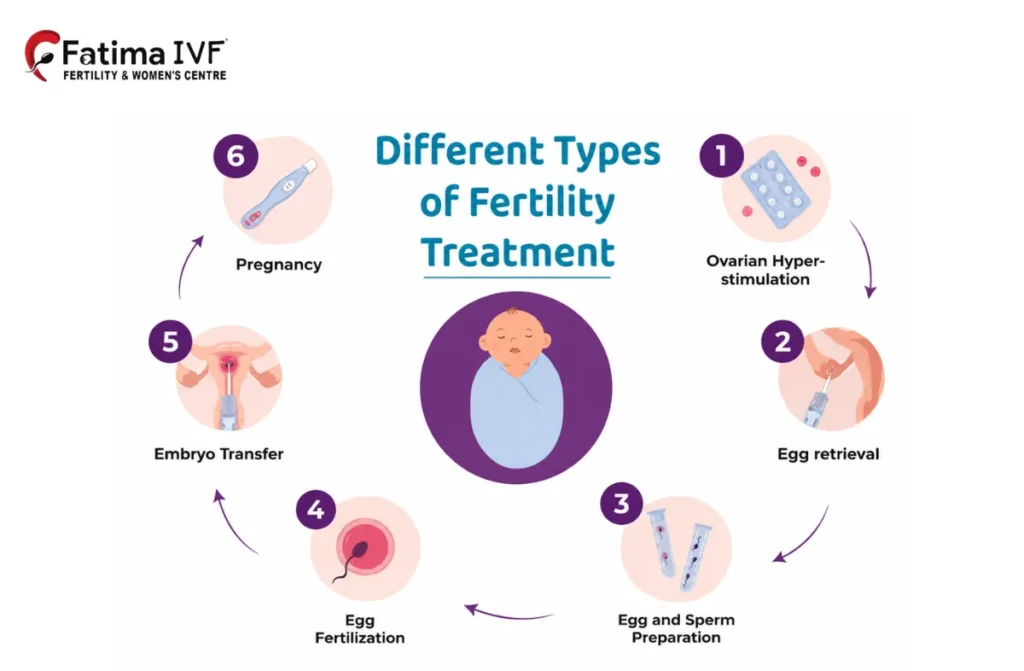
IVF involves collecting eggs from the woman, fertilizing them with sperm in a laboratory, and transferring the resulting embryo into the uterus. It is generally recommended when other treatments have not worked, when tubal blockage is present, or when male-factor fertility challenges are more significant. The process involves several careful steps, including ovarian stimulation, egg retrieval, fertilization, and embryo transfer, each monitored closely by the fertility team. IVF has helped many couples with a wide range of fertility challenges become parents.
Other Assisted Reproductive Options
Beyond standard IVF, additional techniques can help in specific situations. Intracytoplasmic sperm injection, where a single sperm is injected directly into an egg, is often used for significant male-factor challenges. Embryo freezing allows couples to preserve extra embryos for future use. Donor eggs, donor sperm, or gestational surrogacy may be discussed in certain cases, always guided by the couple’s specific circumstances and preferences.
How Couples Can Prepare for Fertility Treatment
Questions to Ask a Fertility Specialist
Walking into your first consultation with a few clear questions helps you make the most of the appointment. It is worth asking what tests are recommended for both partners, what the likely next steps are based on your specific situation, and what the realistic timeline looks like. At Fatima IVF & Women’s Centre, Dr. Fathimunissa welcomes couples to bring their questions directly to consultations at the clinic’s Triplicane and Anna Nagar locations in Chennai, where both partners can be evaluated together in one visit. Asking questions openly, without hesitation, helps you feel more confident and involved in your own care.
Financial and Emotional Considerations
Fertility treatment involves both a financial commitment and an emotional one, and it helps to plan for both in advance. Ask your clinic for a clear breakdown of costs for each stage of treatment, so there are no surprises along the way. Emotionally, it is normal for the process to bring up a mix of hope, patience, and occasional frustration, and that is a shared experience for most couples going through it. Giving yourselves permission to take things one step at a time, rather than rushing the process, tends to make it more manageable.
Supporting Each Other During Treatment
Fertility treatment works best when both partners feel equally involved and supported. Attending appointments together, when possible, helps both partners stay informed and reduces the load on one person. Open communication about how each of you is feeling, without judgment, keeps the process a shared one rather than something one partner carries alone. Many couples also find it helpful to build small, steady routines together, like a daily walk or a regular check-in conversation, to stay connected through the process.
Conclusion
Fertility guidance for couples is really about understanding your bodies, your timeline, and your options, together, as a team. From daily lifestyle habits to medical tests and treatment choices, every step works best when both partners are informed and involved. There is no single right pace for this journey, and reaching out for support, whether early on or after trying for a while, is always a reasonable choice. With the right guidance and a little patience, most couples find a path that works for them.