

Safety Rate
In the first six weeks after birth, thoughtful postpartum care shapes how quickly your body heals and how confident you feel as a new mother. It covers physical recovery, emotional health, feeding, hygiene, and rest. With the right guidance at each stage, most mothers recover fully and adjust smoothly to life with their newborn.
Over the years, I have sat with hundreds of mothers in my clinic during this window, and I can tell you honestly: the sixth week checkup looks very different for a mother who had steady support from day one compared to one who was left to figure things out alone. This guide walks you through every stage of recovery, in plain language, so you know exactly what to expect and when to call your doctor.
Postpartum care is the medical and personal support a mother receives from the moment of delivery through roughly the first year after birth. It includes wound healing, hormone regulation, breastfeeding guidance, mental health checks, and family planning counselling, all working together to help a mother return to full strength.
Simply put, postpartum care is everything that helps a mother's body and mind recover after pregnancy and delivery. This includes regular checkups, wound care, nutrition guidance, and emotional support. In my practice, I tell every patient that recovery is not a single event but a process that unfolds in layers over several months.
The weeks right after delivery are when serious complications, if they happen, are most likely to show up — infection, heavy bleeding, or blood pressure spikes. Regular follow-up during this window catches problems early, often before the mother even feels unwell, which is why I ask patients not to skip a single scheduled visit.
Recovery generally moves through three stages: the acute phase (first 6-12 hours, when vital organs stabilise), the subacute phase (up to six weeks, when the uterus shrinks back and wounds heal), and the delayed phase (up to six months to a year, when muscles, joints, and hormones fully settle). Each stage needs slightly different care.
Most mothers who deliver vaginally feel soreness in the perineal area for one to two weeks. Ice packs in the first 24 hours, followed by warm sitz baths, ease swelling and discomfort considerably. I usually see soreness settle well within ten days when these simple steps are followed consistently.
A cesarean is major abdominal surgery, so recovery naturally takes longer, and I always remind my patients that skipping rest to "push through" only delays true postpartum care progress. Most mothers can walk short distances within a day of surgery, but full incision healing takes about six weeks, and heavy lifting should wait until your doctor clears you.
Vaginal bleeding, called lochia, is normal after any type of delivery and usually lasts four to six weeks, gradually changing from bright red to pink to yellowish-white. Soaking through a pad in under an hour, passing large clots, or a foul smell are signs to call your doctor right away.
Simple measures go a long way: a supportive pillow while sitting, gentle stretching, and doctor-approved pain relief medication. Avoid lying flat for long periods if you had a C-section, since a slightly propped position eases pressure on the incision and helps you breathe and cough more comfortably.
Nearly 70-80% of new mothers experience "baby blues" — mood swings, tearfulness, and irritability that fade within two weeks. Postpartum depression is different: it lasts longer, feels heavier, and can include hopelessness or difficulty bonding with the baby. Recognising this difference early makes treatment far more effective.
Sleep deprivation, hormonal shifts, and the sheer responsibility of a newborn can make even calm mothers feel overwhelmed. Short breaks, honest conversations with your partner, and realistic expectations about the day help enormously. I often tell patients that asking for help is not failure — it is part of good postpartum care.
If low mood, anxiety, or intrusive thoughts persist beyond two weeks, or interfere with caring for yourself or your baby, please reach out to your doctor. In my clinic, postpartum care always includes a mental health check at every visit, because emotional recovery matters just as much as physical healing.
Iron, protein, calcium, and vitamin D support tissue repair and, if you are breastfeeding, milk production. I generally recommend continuing a prenatal vitamin for at least three months after delivery, alongside iron-rich foods, since many mothers are mildly anaemic after blood loss during delivery.
Traditional Tamil postpartum foods like ragi porridge, moong dal, and sesame-based sweets are genuinely well suited for recovery — they are easy to digest and rich in iron and calcium. Include plenty of leafy greens, eggs, and fish or lentils for protein, and avoid very oily or overly spicy food in the first few weeks.
Breastfeeding mothers need noticeably more fluids — aim for at least 3 litres a day, including water, buttermilk, and soups. Dehydration can lower milk supply and worsen fatigue and constipation, so I encourage patients to keep a water bottle within arm's reach at all times, especially during night feeds.
A good latch — where the baby takes in most of the areola, not just the nipple — prevents most early breastfeeding pain. Feeding on demand, roughly every two to three hours in the first weeks, helps establish supply and keeps the baby well nourished.
Sore nipples, engorgement, and blocked ducts are common in the first two weeks. Correcting the latch, feeding frequently, and using warm compresses before feeds usually resolve these quickly. Persistent pain, fever, or a red, tender breast should be checked promptly, as it may signal an infection called mastitis.
Frequent feeding or pumping, adequate rest, good hydration, and foods like fenugreek and oats can support supply naturally. Stress reduction matters too — cortisol from anxiety can genuinely dampen let-down, which is one more reason calm, supported postpartum care benefits both mother and baby.
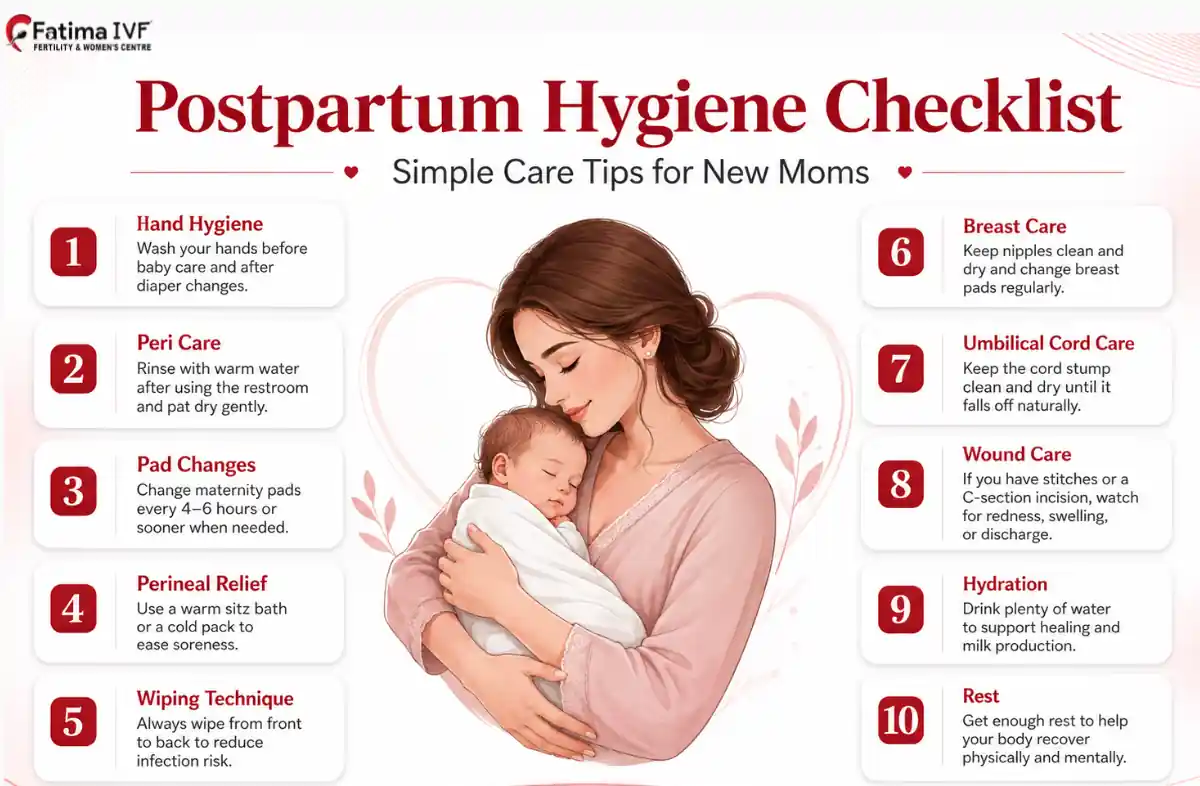
Rinse the area with warm water after using the toilet, pat dry gently from front to back, and change pads every four to six hours. Avoid scented soaps or wipes near the perineum, as they can irritate healing tissue and delay comfort.
Keep the incision clean and dry, watch for redness, warmth, or discharge, and wear loose, breathable clothing over the area. Most surgical glue or staples are checked and removed or dissolve within one to two weeks at your follow-up visit.
Warm showers are safe within a day or two for most mothers, though sitz baths are gentler on a vaginal delivery. If you had a C-section, pat the incision dry rather than rubbing, and avoid submerging in a bathtub until your doctor confirms the wound has closed.
Light walking can usually begin within days of delivery, but structured exercise should wait for your doctor's clearance — typically six weeks after a vaginal birth and slightly longer after a C-section. Always let healing guide the pace, not the calendar.
Once cleared, gentle walking, light stretching, and breathing exercises are excellent starting points. Building intensity slowly, over several weeks, protects healing tissue and avoids setbacks like pain or bleeding that can occur when mothers restart too quickly.
Pelvic floor exercises, done correctly and consistently, meaningfully reduce issues like urine leakage months down the line. I encourage every patient to start gentle pelvic floor activation as soon as it feels comfortable, well before returning to more demanding workouts.
Sleep supports hormone balance, wound healing, and milk supply, which is why rest is treated as a medical priority, not an indulgence, in proper postpartum care. Chronic sleep loss also raises the risk of mood difficulties, so protecting even short rest windows genuinely matters.
Sleeping when the baby sleeps, sharing night feeds with a partner where possible, and keeping the nursery dim and quiet all help. Preparing feeding and diapering supplies within reach before bed also cuts down on fully waking up during night wakings.
Persistent, overwhelming fatigue that does not improve with rest deserves a conversation with your doctor, since it can point to anaemia or thyroid changes that are common and very treatable after delivery.
A thorough postpartum care visit checks the uterus, incision or perineal healing, blood pressure, weight, mood, and breastfeeding progress, usually around week one, week six, and again if anything feels off in between. I encourage mothers from Chennai to reach out sooner if anything worries them, rather than waiting for the scheduled date.
Mothers looking for the best postpartum care in Chennai often ask where to find consistent, judgment-free follow-up. Our team supports patients seeking postpartum care in Annanagar and postpartum care in Triplicane with flexible appointment slots and, where needed, home-visit guidance for mothers who find travel difficult in the early weeks.
Heavy bleeding, fever above 100.4°F, severe headache with vision changes, chest pain, or breathing difficulty need emergency care immediately, not a wait-and-watch approach. I ask every patient to save the clinic's emergency contact number before they even leave the hospital.
Fertility can return before your first period, sometimes as early as three weeks postpartum, so it's worth discussing contraception at your six-week visit even if you are exclusively breastfeeding. Options range from barrier methods to hormonal choices safe during lactation, depending on your health history.
Cooking, managing visitors, handling night-time diaper changes, and simply keeping the house running let a mother focus on healing and feeding. Small, consistent help matters far more than one grand gesture.
Listening without immediately trying to fix things, checking in on mood regularly, and reassuring a mother that she is doing well can meaningfully ease the emotional load of early motherhood.
Splitting night feeds, learning to burp and soothe the baby, and taking turns with pediatrician visits build a partner's confidence and give the mother genuine rest windows to recover.
Pain medication, reduced activity, and iron supplements can slow digestion after delivery. Fibre-rich foods, plenty of fluids, and gentle movement usually resolve this within a week or two; stool softeners are safe if your doctor recommends them.
Noticeable hair shedding around three to four months postpartum is a normal hormonal shift, not a sign of poor health, and it typically resolves on its own by the baby's first birthday.
Mild leakage when coughing or sneezing is common after vaginal delivery due to stretched pelvic floor muscles. It usually improves with pelvic floor exercises over a few months; persistent leakage deserves a proper evaluation.
Estrogen and progesterone drop sharply after delivery, which can affect mood, skin, hair, and milk supply. These shifts are temporary for most mothers and settle gradually as the body readjusts over the following months.
Recovering after childbirth takes time, patience, and the right support system around you. Good postpartum care blends physical healing, emotional steadiness, proper nutrition, and timely medical checkups into one connected journey, and no two mothers move through it at exactly the same pace. If you are in Chennai and would like a doctor who walks this path with you step by step, I welcome you to reach out to our clinic for a personal consultation.
Meet our experienced team of anaesthesiologists dedicated to your safety and comfort
Most postpartum care spans six weeks for basic physical healing, though full hormonal and emotional recovery can take up to a year.
Gentle pelvic floor activation can often begin within the first week, but always confirm timing with your doctor, especially after a C-section.
Yes, mild mood swings known as baby blues affect most new mothers and usually pass within two weeks; anything longer or heavier deserves a doctor’s evaluation.
Soaking a pad within an hour, passing large clots, or noticing a foul odor are signs to contact your doctor immediately.
Yes, our clinic supports mothers seeking postpartum care in Annanagar and Triplicane with flexible visit timings and home-visit guidance where needed.
Take the first step toward parenthood. Book an appointment with our expert team to receive expert guidance, emotional support, and advanced fertility solutions designed just for you.