
Fibroid
0 +
Years of Experience
0 +
Expert Doctors
0 %

Safety Rate

0 /7
Emergency Care

Fibroid Uterus Services

Comprehensive Fibroid Uterus care with advanced monitoring and safety protocols

A fibroid is one of the most common health conditions women face — yet most women don’t know they have one until a doctor finds it. If you have been told that you have a fibroid uterus, or if you are experiencing heavy periods, pelvic pain, or trouble getting pregnant, you are not alone.

Dr. Fathimunissa is a trusted specialist offering fibroid treatment in Chennai with a focus on women’s health, fertility, and long-term well-being. At Fatima Fertility, every woman is treated with compassion, clarity, and the best available medical care. This page will walk you through everything you need to know about fibroids — from what causes them to how they are treated and what to expect after care.

How Fibroids Develop

A fibroid is a non-cancerous growth that forms in or around the uterus. The medical name for it is uterine leiomyoma. These growths are made up of muscle tissue and fibre. They are not cancer, and in most cases, they do not turn into cancer either.

Fibroids grow because of hormones — mainly oestrogen and progesterone. These are the same hormones that control your menstrual cycle. When the hormone levels are high, fibroids can grow. This is why fibroids are more common during the reproductive years (from the late teens to menopause) and tend to shrink on their own after menopause.

Several factors increase the chance of developing a fibroid uterus:

  • Family history – If your mother or sister had fibroids, your risk is higher.
  • Age – Fibroids are more common between the ages of 30 and 50.
  • Weight – Being overweight can raise oestrogen levels, which may encourage fibroid growth.
  • Diet – Eating a lot of red meat and low amounts of fruits and vegetables has been linked to higher fibroid risk.
  • Vitamin D deficiency – Research shows that women with low vitamin D levels may develop fibroids more often.
  • Ethnicity – Fibroids are more common in women of African descent, though they can affect women of all backgrounds.

Fibroids can be as small as a seed or as large as a melon. A woman may have one fibroid or several at the same time. Their size and location inside the uterus determine what symptoms, if any, she will feel.

Common Symptoms of Fibroids

Many women with fibroids have no symptoms at all. In these cases, the fibroid is found during a routine check-up or scan. But for others, the symptoms can seriously affect daily life.

  • Heavy menstrual bleeding is the most common symptom. Periods may be much longer than usual, or the blood flow may be so heavy that it becomes difficult to manage. Some women pass large clots. This kind of heavy bleeding can lead to anaemia — a condition where you don't have enough red blood cells — which causes tiredness and weakness.
  • Pelvic pressure or pain is another frequently reported symptom. As the fibroid grows, it takes up space inside the abdomen. This can cause a feeling of fullness, heaviness, or a constant dull ache in the lower belly or back.
  • Frequent urination happens when a fibroid presses on the bladder. You may feel the urge to go to the toilet more often, especially at night.
  • Constipation or bloating can occur if the fibroid is pressing on the bowel. Some women feel their abdomen looks or feels larger than usual, even without weight gain.
  • Painful periods — cramps that are worse than normal — are common in women with fibroids inside the uterine cavity.
  • Pain during sex is reported by some women, particularly if the fibroid is located near the cervix or lower part of the uterus.
  • Difficulty getting pregnant or repeated miscarriages can also be connected to fibroids, depending on their size and position.

If you notice any of these symptoms, speaking with a specialist for fibroid uterus treatment in Chennai is a good first step.
Fibroid treatment in chennai

Types of Fibroids

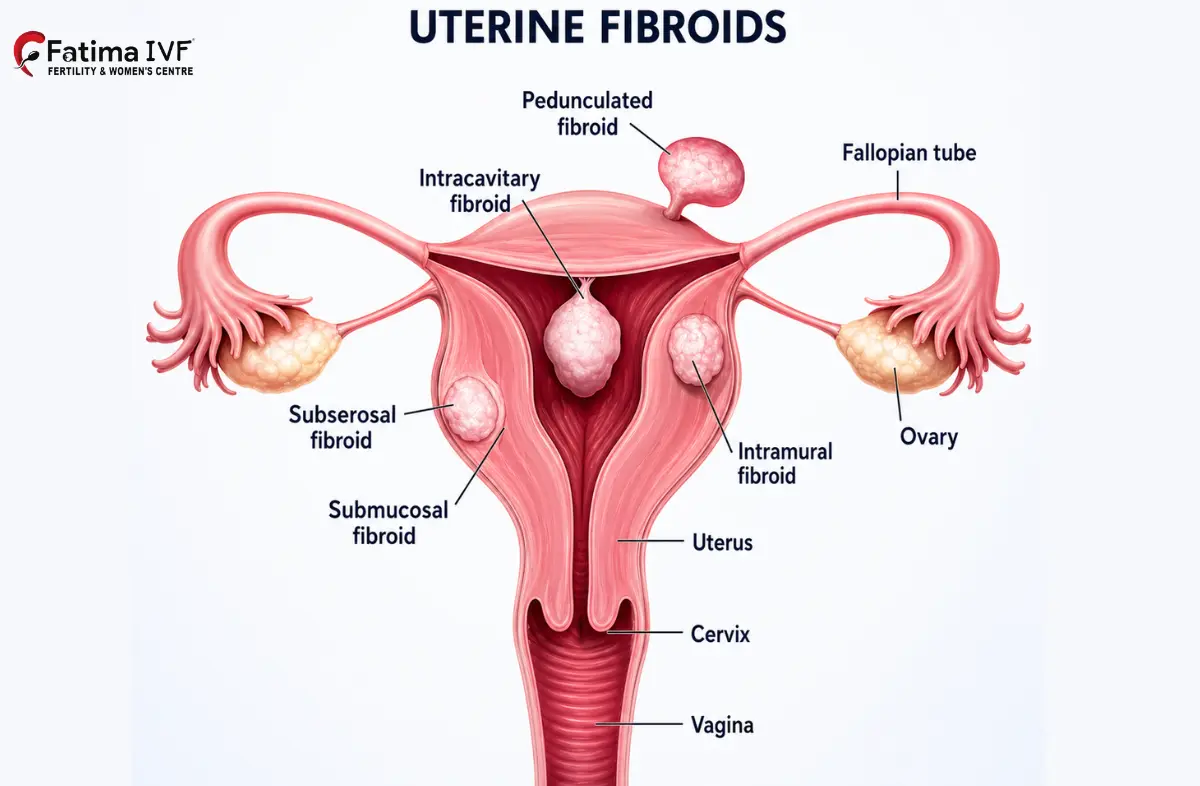
Not all fibroids are the same. They are classified based on where they grow inside or around the uterus. Understanding the type of fibroid helps the doctor decide the best treatment approach.

  • Intramural fibroids are the most common type. They grow within the wall of the uterus itself. When they become large, they can stretch and enlarge the uterus. Intramural fibroids often cause heavy bleeding and pelvic pressure.
  • Submucosal fibroids grow just beneath the inner lining of the uterus (the endometrium). Even a small submucosal fibroid can cause significant bleeding and is most likely to affect fertility and cause miscarriages. These are often found inside the uterine cavity.
  • Subserosal fibroids grow on the outer surface of the uterus. They can become very large and push against nearby organs like the bladder or bowel. They usually cause pelvic pressure but may not always affect periods.
  • Pedunculated fibroids are attached to the uterus by a thin stalk rather than growing directly in the tissue. They can grow outside or inside the uterus. If the stalk twists, it can cause sudden, sharp pain.
  • Cervical fibroids are less common but develop in the neck of the uterus (the cervix). They can cause pain during sex and may sometimes cause complications during childbirth.

Each type has its own pattern of symptoms and its own set of treatment options. Dr. Fathimunissa carefully assesses the type and location of each fibroid before recommending a treatment plan for fibroid treatment in Chennai.

How Fibroids Are Diagnosed

Getting an accurate diagnosis is the first step toward finding relief. Dr. Fathimunissa uses a thorough and careful approach to understand each patient's situation.

  • Medical history and physical examination — The consultation starts with a conversation. Dr. Fathimunissa will ask about your symptoms, your menstrual history, your family history, and any past pregnancies. A pelvic examination is then done to check the size and feel of the uterus. A fibroid uterus is often enlarged or has an irregular shape that can be felt during the examination.
  • Ultrasound scan — This is the most common and reliable test for diagnosing fibroids. A pelvic ultrasound uses sound waves to create a picture of the uterus. It can show the number, size, and location of fibroids clearly. A transvaginal ultrasound (where a small probe is gently inserted into the vagina) gives an even clearer image.
  • Sonohysterography — In this test, a small amount of saline (salt water) is put into the uterus before the ultrasound. This helps to outline the inside of the uterus more clearly and is especially useful for detecting submucosal fibroids.
  • MRI scan (Magnetic Resonance Imaging) — An MRI provides a detailed image of the uterus and surrounding organs. It is useful when surgery is being planned, or when the ultrasound results are unclear.
  • Hysteroscopy — A thin, flexible camera called a hysteroscope is passed through the cervix into the uterus. This allows the doctor to directly see the inside of the uterus and check for fibroids that are growing inside the cavity.
  • Blood tests — These are done to check for anaemia (iron deficiency from heavy bleeding) and to rule out other causes of symptoms like thyroid disorders or hormonal imbalances.

With the right diagnosis, the best plan for fibroid uterus treatment in Chennai can be made specifically for you.

Treatment Options for Fibroids

Not every fibroid needs immediate treatment. Small fibroids that are not causing symptoms may simply be monitored with regular scans. But when symptoms are affecting your health, your periods, or your ability to conceive, treatment is recommended.

Dr. Fathimunissa offers a full range of treatment options — from the least invasive to surgical — based on each woman's specific situation, age, symptoms, and whether she plans to have children in the future.

Watchful Waiting (Monitoring)

For women with small fibroids and mild or no symptoms, regular monitoring may be all that is needed. This involves periodic ultrasound scans to check if the fibroid is growing. Many fibroids stop growing or shrink naturally after menopause.

Medical Management (Medicines)

Several medicines can help manage fibroid symptoms without surgery:

  • Hormonal medications such as GnRH agonists can lower oestrogen levels temporarily, shrinking fibroids before surgery or to manage heavy bleeding.
  • Oral contraceptives and progestins can help regulate periods and reduce heavy bleeding, though they do not shrink fibroids.
  • Tranexamic acid can reduce heavy bleeding during periods.
  • Iron supplements are given if anaemia has developed due to blood loss.
  • Pain relievers such as NSAIDs (like ibuprofen) can help with cramping and discomfort.

Medicines are most useful for managing symptoms in the short term and are often combined with other treatments.

Minimally Invasive Procedures

  • Uterine Fibroid Embolisation (UFE) is a non-surgical procedure where a radiologist blocks the blood supply to the fibroid. Without blood, the fibroid shrinks over time. This preserves the uterus and requires a shorter recovery compared to surgery.
  • Hysteroscopic Myomectomy is used specifically for submucosal fibroids (those inside the uterine cavity). A hysteroscope is used to remove the fibroid without any cuts on the abdomen. Recovery is faster, and the uterus is preserved.
  • Laparoscopic Myomectomy is a keyhole surgical procedure to remove fibroids from the uterine wall while keeping the uterus intact. It is suitable for women who wish to preserve their fertility. Small instruments and a camera are inserted through tiny cuts in the abdomen. Recovery is quicker than open surgery.

Surgical Treatment

  • Abdominal Myomectomy (Open Surgery) is recommended when fibroids are very large, numerous, or in difficult locations. The surgeon removes the fibroids through an incision in the abdomen, preserving the uterus. Recovery takes longer, but the uterus remains for future pregnancies.
  • Hysterectomy is the complete removal of the uterus. It is a permanent cure for fibroids and is recommended only for women who have completed their family or who have severe symptoms that have not responded to other treatments. Dr. Fathimunissa discusses this option only when truly necessary and always with the patient's full understanding and consent.

The right fibroid treatment in Chennai depends on the size and location of the fibroid, the woman's age, her symptoms, and her personal priorities. Dr. Fathimunissa takes time to explain all options clearly before any decision is made.

Why Chennai Is the Best Destination for Fibroid Care

Chennai has grown into one of India's leading cities for women's health and gynaecological care. Women from across Tamil Nadu, neighbouring states, and even from abroad come to Chennai for treatment because of the quality of doctors, technology, and personalised attention available here.

  • Experienced specialists — Chennai is home to gynaecologists and fertility specialists with years of focused training in conditions like fibroid uterus. Dr. Fathimunissa brings deep expertise in both gynaecological care and reproductive medicine, which means her patients receive treatment that looks at the whole picture — not just the fibroid, but their health and fertility goals too.
  • Advanced diagnostic tools — Facilities in Chennai are equipped with high-resolution ultrasound machines, MRI scanners, and hysteroscopy setups that allow for precise and accurate diagnosis.
  • Affordable, quality care — Compared to many Western countries, fibroid uterus treatment in Chennai is available at significantly lower costs without compromising on quality or outcomes.
  • Personalised approach — At Fatima Fertility, Dr. Fathimunissa believes that no two women are the same. Treatment plans are built around the individual — her body, her lifestyle, her family plans, and her comfort.
  • Supportive environment — From the first consultation to the last follow-up, the team at Fatima Fertility ensures that every patient feels informed, heard, and supported throughout her treatment journey.

Fibroids & Fertility – What You Need to Know

One of the most common concerns women bring to Dr. Fathimunissa is whether a fibroid will stop them from getting pregnant. The honest answer is: it depends on the type, size, and location of the fibroid.

When fibroids affect fertility:

Submucosal fibroids — those that grow into the uterine cavity — are the most likely to interfere with pregnancy. They can prevent an embryo from implanting properly or cause the uterus to contract in a way that increases miscarriage risk. Large intramural fibroids can also distort the shape of the uterus and affect implantation.

When fibroids may not affect fertility:

Many women with fibroids, particularly small subserosal ones that grow on the outside of the uterus, conceive and carry pregnancies without any problem. If the fibroid is not near the cavity and is not large enough to affect blood flow or uterine shape, it may not need treatment before trying to conceive.

Fibroid treatment before pregnancy:

If tests show that a fibroid is likely to affect your ability to conceive or maintain a pregnancy, Dr. Fathimunissa may recommend removing it through a myomectomy before IVF or natural conception attempts. This is a fertility-preserving surgery — the uterus is kept intact and healthy for pregnancy.

During pregnancy with fibroids:

Women who conceive with known fibroids are monitored carefully. In most cases, fibroids do not grow significantly during pregnancy. However, some fibroids may enlarge and cause discomfort, premature contractions, or, in rare cases, complications with the position of the baby. Regular antenatal monitoring is important.

After childbirth:

Fibroids often shrink significantly after delivery as hormone levels return to normal.

Dr. Fathimunissa has helped many women with fibroid uterus conditions achieve their dream of having a child. A comprehensive assessment and personalised plan make all the difference.

Recovery After Fibroid Treatment

Recovery depends on the type of treatment chosen. Here is what to expect after the most common procedures:

  • After Hysteroscopic Myomectomy: This is the fastest recovery. Most women can go home the same day or the next morning. Mild cramping and light spotting are normal for a few days. You can return to daily activities within a week. Strenuous exercise and sexual activity are usually avoided for two to four weeks.
  • After Laparoscopic Myomectomy: This involves small incisions, so recovery is quicker than open surgery. Most women spend one night in the hospital. Expect mild soreness and fatigue for one to two weeks. Full recovery takes around two to four weeks. Most women can return to work within two weeks, and heavier activities can resume after four to six weeks.
  • After Abdominal Myomectomy (Open Surgery): Since this involves a larger incision, recovery takes longer. You will likely stay in the hospital for two to three days. Rest is important for four to six weeks. Light walking is encouraged early, but strenuous activity should wait until the doctor gives clearance.
  • After Uterine Fibroid Embolisation: Most women are discharged the next day. Pain and fatigue are common in the first few days. Full recovery takes one to two weeks. Fibroids continue to shrink over the following months.
  • After Hysterectomy: Recovery is longer — usually six to eight weeks. The first two to three weeks require rest, with gradual return to light activities. A full return to normal life happens within six weeks for most women.

Throughout recovery, Dr. Fathimunissa and the team at Fatima Fertility remain available for any questions, follow-up appointments, and support. Regular check-ups and imaging are scheduled to confirm that the treatment has been effective.

Complications of Untreated Fibroids

Choosing to wait and watch is reasonable for small fibroids with no symptoms. But when fibroids are causing symptoms and are left untreated for long periods, they can lead to complications.

  • Severe anaemia is one of the most serious consequences of heavy, prolonged bleeding from fibroids. Chronic iron deficiency can cause extreme tiredness, shortness of breath, poor concentration, and in severe cases, heart complications.
  • Chronic pain from large fibroids pressing on nerves and organs can significantly reduce quality of life. Some women experience constant back pain, leg pain, or pressure in the pelvis that makes it hard to sit, stand, or sleep comfortably.
  • Bladder and kidney problems can develop if a large fibroid puts continuous pressure on the bladder or the tubes that carry urine from the kidneys (ureters). This can lead to frequent infections or, in rare cases, blocked urine flow.
  • Fertility problems — untreated fibroids, especially those inside the uterine cavity, can make it increasingly difficult to conceive over time. The longer they are left, the larger they may grow.
  • Pregnancy complications — an untreated fibroid discovered during pregnancy may increase the risk of premature birth, placenta problems, or abnormal positioning of the baby.
  • Emotional impact — living with heavy bleeding, pain, and uncertainty takes a toll. Many women with untreated fibroids report feeling anxious, exhausted, and socially withdrawn.

Timely fibroid treatment in Chennai with Dr. Fathimunissa can prevent these complications and significantly improve a woman's quality of life.

Lifestyle Tips to Manage Fibroids

While lifestyle changes cannot remove a fibroid, they can help manage symptoms, slow fibroid growth, and support your overall health during treatment and recovery.

  • Eat a balanced, anti-inflammatory diet. Include plenty of fresh fruits, vegetables, whole grains, and legumes. Green leafy vegetables like spinach and kale are particularly helpful for iron levels if you have heavy bleeding. Reduce red meat, processed foods, and high-fat dairy, as these may raise oestrogen levels in the body.
  • Maintain a healthy weight. Fat tissue produces oestrogen. Keeping your weight within a healthy range helps keep hormone levels balanced, which may reduce fibroid growth.
  • Exercise regularly. Moderate, consistent exercise — such as walking, swimming, or yoga — helps regulate hormones, reduce inflammation, and manage stress. Heavy high-intensity exercise during symptomatic periods may worsen discomfort, so listen to your body.
  • Manage stress. Chronic stress affects hormones. Techniques like deep breathing, meditation, and adequate sleep all support hormonal balance and general well-being.
  • Stay well hydrated. Drinking enough water helps with digestion, reduces bloating, and supports overall organ function — especially important when fibroids are pressing on the bladder or bowel.
  • Avoid self-medication. Do not take hormonal supplements, herbal remedies, or over-the-counter medicines without consulting Dr. Fathimunissa. Some supplements can interfere with treatment or worsen hormonal imbalances.
  • Attend all follow-up appointments. Even if you are feeling better, regular scans and check-ups ensure that the fibroid is being monitored and that no new growths are developing.
  • Iron-rich foods — If you have heavy periods, adding iron-rich foods like lentils, beans, tofu, and fortified cereals can help prevent or manage anaemia until bleeding is controlled.

Small daily habits, combined with the right medical care, make a real difference in how you feel when living with a fibroid uterus.

Conclusion

A fibroid does not have to control your life. Whether your symptoms are mild or severe, whether you are planning a pregnancy or looking for relief from pain and heavy bleeding, there is a treatment option that is right for you.

Dr. Fathimunissa at Fatima Fertility in Chennai brings together clinical expertise, modern technology, and genuine compassion to offer the best possible care for women with fibroids. From your first visit to your final follow-up, you will receive honest information, careful attention, and a treatment plan built around your needs.

If you have been experiencing symptoms of a fibroid uterus or have already been diagnosed and are exploring your options, do not wait. Early consultation leads to better outcomes — for your health, your periods, and your fertility.

Our Latest Vlogs

Too Much Weight Gain During Pregnancy?

கர்ப்பகாலத்தில் Exercise பண்ணலாமா |Is Exercise Safe During Pregnancy?

Baby Not Moving in Pregnancy? Can Music Help? | Pregnancy Tips

HSG test அப்படின்னா என்ன | Infertility

Period Miss ஆன அடுத்த நாளே Urine Pregnancy Test பண்ணுமா? -Dr.Fathimunissa

IVF-ல் twin pregnancy chances அதிகம்

Our Specialists

Meet our experienced team of anaesthesiologists dedicated to your safety and comfort

No data was found

Related Blogs

No data was found

Frequently Asked Questions

The best treatment depends on size, symptoms, and pregnancy plans. Minimally invasive procedures like laparoscopic myomectomy or hysteroscopic removal offer excellent results while preserving fertility. Non-surgical options like UAE also provide symptom relief. Choosing the Best Fibroid Treatment in Chennai ensures accurate diagnosis and tailored solutions for long-term comfort and reproductive health.

Yes. Fibroids may distort the uterus, block fallopian tubes, interfere with implantation, and increase miscarriage risk. Treating them early improves fertility outcomes and supports healthy pregnancy progression. Specialists offering the Best Fibroid Treatment in Chennai focus on preserving uterine health and maximizing chances of natural conception or IVF success.

Seek medical evaluation if you have heavy bleeding, pelvic pressure, severe cramps, bloating, or difficulty conceiving. These symptoms may indicate fibroids requiring timely care. Early diagnosis ensures safer treatments, shorter recovery, and better outcomes. Getting the Best Fibroid Treatment in Chennai helps you manage symptoms effectively and prevent future complications.