

Three IVF cycles without a pregnancy can leave you tired, sad and full of questions. If you are searching for 3 failed IVF cycles what next, you deserve a straight and kind answer. The most useful next step is usually a careful look back at what happened in each cycle. It is not always a fourth cycle done the same way, and it is not a long list of every test available.
Three unsuccessful cycles do not mean IVF cannot work for you. They also do not point to one fixed cause. Your age, the quality of eggs and sperm, how your embryos grew, the health of your uterus and the finer details of each treatment all play a part. This guide explains how doctors think about these factors, which tests are worth discussing and what you can ask at your next visit.
What Do Three Unsuccessful IVF Cycles Really Mean?
An IVF cycle has many stages, and it can pause at any one of them. Knowing where yours paused is the first clue.
Stages where an IVF cycle can stop
- Stimulation: the ovaries give fewer eggs than expected, or the eggs are slow to mature.
- Fertilisation: eggs do not fertilise, or only a few do.
- Embryo growth: embryos stop developing before they can be frozen or transferred.
- Implantation: an embryo is transferred, but the pregnancy test is negative.
- Early pregnancy: a pregnancy starts but does not continue.
Three words are often mixed up. An unsuccessful cycle means the whole attempt, from medicines to the pregnancy test, did not end in an ongoing pregnancy. A failed transfer means one embryo transfer did not work, and one egg collection can give you several transfers. A pregnancy loss means a pregnancy was confirmed and then ended. Each of these is looked at differently by your doctor.
The number of cycles alone says very little. Two women can each have three unsuccessful cycles for very different reasons. Doctors use the term recurrent implantation failure for repeated transfers that do not work, but there is no single agreed meaning. The 2023 ESHRE guidance, from a European fertility society, suggests looking deeper once the estimated chance of success from the embryos transferred has reached about 60% without a pregnancy, instead of just counting cycles.
Why Does IVF Fail More Than Once?
Reasons for repeated IVF failure differ from person to person. Doctors usually start with the factors below. Not every factor applies to every patient, and sometimes no clear reason is found.
Egg Quality and Age
Each egg carries half of an embryo’s chromosomes. With age, more eggs have chromosome changes. Embryos with the wrong chromosome number may stop growing, may not implant or may end in an early miscarriage. Age is one of the strongest influences on IVF results, and it is simply biology. It is never your fault.
Sperm Quality
A routine semen analysis looks at count, movement and shape. Sometimes the sperm DNA is damaged even when this report looks normal. A sperm DNA fragmentation test (DFI) can be discussed when fertilisation was poor or embryos grew slowly. Male infertility treatments and ICSI may help in selected cases.
Embryo Growth and Chromosomes
Not every fertilised egg becomes an embryo that is ready for transfer. This happens even in healthy couples. Under the microscope, embryos are graded by their look, but the look cannot show the chromosome count. A nicely graded embryo can have a chromosome change, and an average-looking one can be normal.
Uterus and Lining
A polyp, a fibroid pressing into the cavity, scar tissue or a septum can make it harder for an embryo to settle. A thin lining or inflammation can also matter. Doctors look for these when your history or scans give a reason, not in every patient.
Hormones and General Health
Thyroid problems, high prolactin and uncontrolled blood sugar can affect treatment. Conditions such as PCOS can change how the ovaries respond to medicines. These are checked when your story points towards them.
Treatment Details
The day of transfer, how the lining was prepared, when progesterone began and how the transfer went can all matter. If something stands out in your notes, your doctor can review it with you.
When No Cause Is Found
Many unsuccessful cycles stay unexplained even after careful checks. A chromosomally normal embryo does not always implant, so chance plays a role. Be careful with anyone who promises there is always one clear reason.
What Should You Review First?
Most of what follows a failed cycle is review work, and it is worth doing well. When you ask 3 failed IVF cycles what next, your fertility specialist can answer best when all your records are on the table. Bring the following with you.
Records to bring to your consultation
- Stimulation plans and how your ovaries responded
- Number of eggs collected and how many were mature
- Fertilisation results for each cycle
- Embryo growth and grading reports
- Freezing and transfer records
- Details of lining checks and transfer preparation
- Pregnancy test results and any earlier pregnancy losses
- Medical history and test reports of both partners
When these are read side by side, a pattern often appears. Perhaps egg numbers were low each time. Perhaps fertilisation was fine, but embryos stopped growing early. Perhaps good-looking embryos were transferred and none implanted. Each pattern leads to a different next step, and one cycle alone rarely shows it.
Which Tests May Help After Repeated IVF Failure?
There is no fixed test package. A sensible plan for 3 failed IVF cycles what next depends on your age, your treatment history, what earlier cycles showed and whether a result could change your plan. If a test cannot change the plan, it may only add cost and worry. Your doctor will choose only the ones that fit you.
Tests that are often discussed
- Ovarian reserve: an AMH blood test and an antral follicle scan, read along with how your ovaries reacted before.
- Uterine cavity check: an ultrasound first, and a hysteroscopy (a thin camera that looks inside the uterus) if a problem is suspected.
- Hormone tests: thyroid, prolactin or blood sugar, chosen by your history.
- Male tests: a repeat semen analysis, with DFI or further checks when results or earlier fertilisation call for them.
- Embryology review: a close look at past lab reports, with genetic counselling if family or pregnancy-loss history suggests it.
- A wider infertility workup to bring all of this together.
PGT-A
PGT-A checks whether an embryo has the usual number of chromosomes. A few cells are taken from a day 5 or day 6 embryo and studied in a lab. It sounds like a clear answer, but research results are mixed, and international guidance does not recommend it as a routine add-on to raise live birth rates. PGT-A may be discussed in selected situations, such as a known chromosome change in one partner, and its limits should be explained first.
Endometrial Receptivity Testing
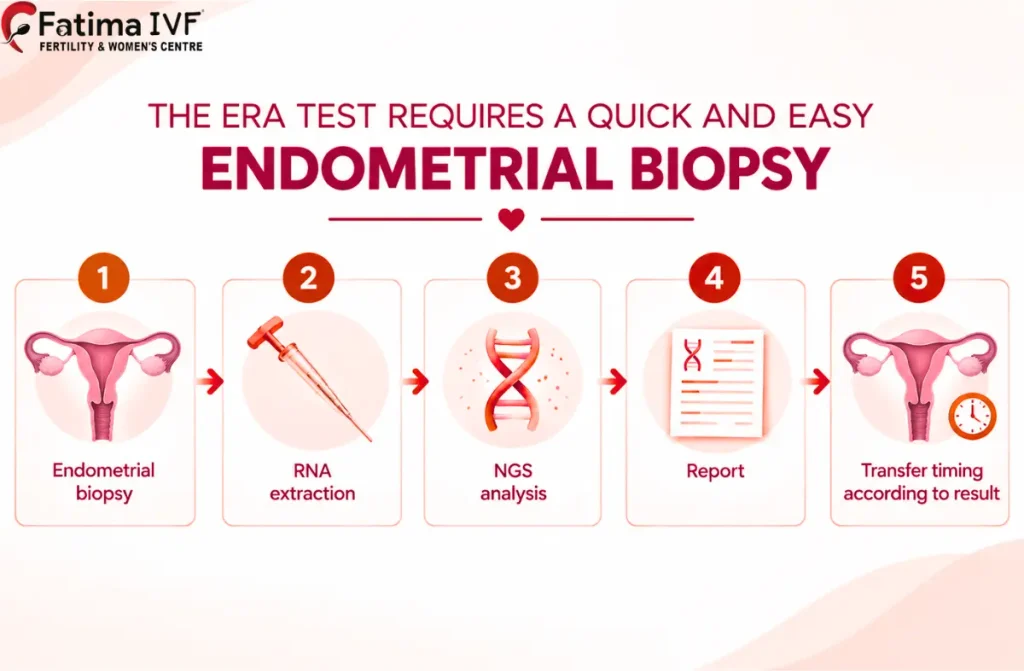
Tests like ERA study a small sample of the lining to estimate the right day for transfer. Current evidence has not shown better results for most people, so these tests make sense only when there is a specific reason and your doctor can say how the result would change your treatment.
Immune and Clotting Tests
Long lists of immune and clotting tests are sometimes offered. Guidelines advise against routine immune treatments such as intralipids, IV immunoglobulin or steroids. Clotting tests are useful when you have a personal or family history of clots or repeated pregnancy loss, and not otherwise.
Whatever is proposed, you can ask what the test is for, what it cannot tell you, who benefits and what it costs.
What Treatment Options Can You Discuss?
People who ask 3 failed IVF cycles what next often hope for one new treatment. In real life, care after repeated failure is a set of smaller choices, and no single plan fits everyone.
Adjusting the Stimulation Plan
If earlier cycles gave few eggs, or many eggs that did not mature, the medicines, doses or timing may change. The change should follow your own response and not a standard recipe.
Treating What Is Found
If a polyp, fibroid, scar tissue or septum is found, treating it before the next transfer may be considered, sometimes through hysteroscopy or laparoscopy. The same goes for thyroid or sugar problems. Treating a real finding is very different from treating a test result with no proven meaning.
Planning the Transfer Again
The transfer day, lining preparation, embryo stage and technique can all be reassessed. In some cases, embryo freezing with a transfer in a later cycle may suit you better.
Sperm and Fertilisation Techniques
ICSI may help when sperm quality or earlier fertilisation was poor. When sperm DNA damage is found, techniques such as MACS or microfluidics may be talked about. None of these is needed by everyone, and none should be added only because earlier cycles did not work.
Other Ways to Build a Family
In some situations, such as very low ovarian reserve, your doctor may talk about egg donation, embryo donation or other paths. These choices depend on your medical picture, your own wishes and Indian law, including the ART (Regulation) Act, 2021. It should always be a conversation and never pressure.
Continuing, Pausing or Rethinking
Another cycle, a break or a different path are all fair choices. Talk through the likely benefits, the limits, the cost and how ready you feel. Taking a pause is not giving up.
Is a Second Opinion or a New Clinic Needed?
Not always. A new clinic does not improve results on its own, and many patients find answers through a thorough review. A second opinion can still help if you want clearer explanations of past results, a fresh look at embryology records, advice on costs and tests, or simply another qualified view. It is a normal request. Share the same records with both doctors, ask both the same questions and compare what you hear.
How Can You Prepare for Your Next Step?
Gather every report from earlier treatment, and list your current medicines and health conditions. Follow the advice given under preconception care, avoid smoking and ask your doctor about alcohol, food, sleep and gentle exercise. Ask what outcomes to expect, what the plan will cost and what other choices exist. Support from a counsellor is also a good part of preparing.
Healthy habits support your general health, but they cannot promise IVF success. An unsuccessful cycle is not proof that you did something wrong.
Looking After Your Heart During This Time
Give yourself time. There is no deadline for deciding. Talk openly with your partner, because partners often cope in different ways, and lean on someone you trust or a qualified counsellor. Before another cycle, speak about money and emotional energy as honestly as you speak about medicine. Make your decision at your own pace, not under pressure from family, friends or anyone selling a package.
Research has not shown that stress or a lack of positive thinking makes IVF fail. Please do not carry that blame.
Questions to Ask Your Fertility Specialist
Take this list to your appointment
- What did my earlier cycles show?
- Was there a clear reason for the unsuccessful results?
- Were there any issues with egg growth, fertilisation or embryo development?
- Does my uterus need to be checked again?
- Which extra tests, if any, could change my plan?
- What are the benefits and limits of another IVF cycle?
- Should we change the treatment approach?
- What outcomes are realistic for our situation?
- What will the next plan cost, including extra tests?
- Would a second opinion be useful for us?
A Review of Your Past Cycles at Fatima IVF, Chennai
If you are still working out 3 failed IVF cycles what next, a calm, unhurried consultation can be a good place to begin. At Fatima IVF, Fertility & Women’s Centre, Dr. Fathimunissa and the fertility team go through your history, earlier IVF records and test reports with you. They explain which options may suit your situation, using services such as IVF, ICSI, embryo freezing, PGT-A and a full infertility workup. You can read more about female infertility treatment and male infertility treatments too.
You can visit us at our Anna Nagar centre at No. 1587, 6th Avenue, Anna Nagar, Chennai 600 040 (opposite SBI Bank), or at our Triplicane centre at No. 1/1, Ground Floor, Triplicane High Road, Triplicane, Chennai 600 005.
To book a visit, call +91 91766 24850 or fill in the appointment form when you feel ready.
Taking Your Next Step with Confidence
Nobody should have to figure this out alone. The most helpful move is to review your records, find the factors that matter in your case and talk through realistic options with a specialist. Some people will need more tests, some a changed plan and some a pause. When you feel ready, the Fatima IVF team is here to listen and guide you.