How the Right Diet Can Restore Your Body’s Natural Rhythm
Have you ever noticed your mood crashing for no clear reason, energy dipping mid-day, or sleep feeling completely off-track? These are often subtle signs of hormonal imbalance. What many people don’t realise is that diet plays a massive role in how hormones function. In fact, Foods for Hormonal Balance are one of the most powerful tools you can use to support your body naturally—no extreme cleanses, no hype, just science-backed nutrition.
Hormones control metabolism, mood, sleep, fertility, and even how your body responds to stress. When they’re out of sync, everything feels harder. The good news? Strategic food choices can help restore balance and improve overall well-being.
Understanding Hormonal Imbalance
Hormones act as chemical messengers, travelling through the bloodstream to regulate essential functions like growth, digestion, reproduction, and emotional health. Stress, lack of sleep, processed diets, and environmental toxins can disrupt this delicate system.
When hormone levels are too high or too low, symptoms may include weight gain, fatigue, acne, irregular periods, low libido, poor sleep, and mood swings. One of the most effective Natural Ways to Balance Your Hormones is correcting nutritional deficiencies and supporting the endocrine system through diet.
Why Diet Matters for Hormone Health
Hormones are made from nutrients—especially healthy fats, proteins, vitamins, and minerals. A nutrient-poor diet weakens hormone production, while a balanced diet supports hormone signalling and metabolism.
A hormone-friendly eating pattern focuses on whole foods that stabilise blood sugar, reduce inflammation, and support gut health. This is why Foods for Hormonal Balance are recommended as a first-line lifestyle approach for managing hormone-related symptoms.
15 Best Foods for Hormonal Balance
Below are evidence-backed Foods for Hormonal Balance that support the endocrine system naturally:
1. Eggs
Eggs contain high-quality protein and healthy fats needed for hormone synthesis. Choline in eggs supports brain and nervous system function, indirectly improving hormonal regulation.
2. Leafy Greens
Spinach, kale, and moringa are rich in magnesium, which helps reduce PMS, support adrenal health, and improve insulin sensitivity.
3. Nuts (Almonds & Walnuts)
Packed with vitamin E and omega fats, nuts reduce inflammation and assist in reproductive hormone balance.
4. Seeds (Pumpkin, Sesame, Sunflower)
High in zinc and selenium, these seeds are essential for thyroid and reproductive hormones.
5. Coconut Oil
Medium-chain triglycerides support metabolism and cortisol regulation, making it one of the underrated Foods for Hormonal Balance.
6. Berries
Loaded with antioxidants, berries protect adrenal glands and reduce oxidative stress that disrupts hormone signalling.
7. Green Tea
Rich in EGCG, green tea supports metabolism and insulin balance. Keep caffeine under 200–300 mg/day to avoid cortisol spikes.
8. Turmeric
Curcumin reduces chronic inflammation, which is often a hidden driver of hormonal imbalance.
9. Greek Yoghurt
Probiotics improve gut health, which is critical because hormones are metabolised and recycled in the gut.
10. Dark Chocolate
High in magnesium and flavonoids, it supports mood regulation and lowers stress hormones.
11. Avocados
Healthy fats in avocados help regulate estrogen and progesterone levels efficiently.
12. Broccoli
Contains indole-3-carbinol, which supports estrogen detoxification and balance—especially beneficial for women.
13. Salmon
Omega-3 fatty acids reduce inflammation and support reproductive hormones. Regular intake may ease menstrual discomfort.
14. Flaxseeds
Rich in lignans, flaxseeds act as phytoestrogens and help stabilise estrogen levels.
15. Quinoa
A complete protein that stabilises blood sugar, preventing insulin-related hormonal fluctuations.
Together, these Foods for Hormonal Balance nourish the body at a cellular level.
Hormone-Balancing Foods for Men
Men benefit from zinc-rich foods like eggs and pumpkin seeds to maintain testosterone levels. Magnesium from leafy greens and dark chocolate helps regulate cortisol. Healthy fats from salmon and avocados support metabolic and reproductive hormones. These Foods for Hormonal Balance are essential for long-term energy and vitality.
Hormone-Balancing Foods for Women
Women experience cyclical hormone shifts throughout life. Flaxseeds, leafy greens, berries, and healthy fats help stabilise estrogen and progesterone. These Foods to Naturally Balance Hormones reduce PMS symptoms, support fertility, and improve mood consistency.
Foods to Avoid for Better Hormonal Health
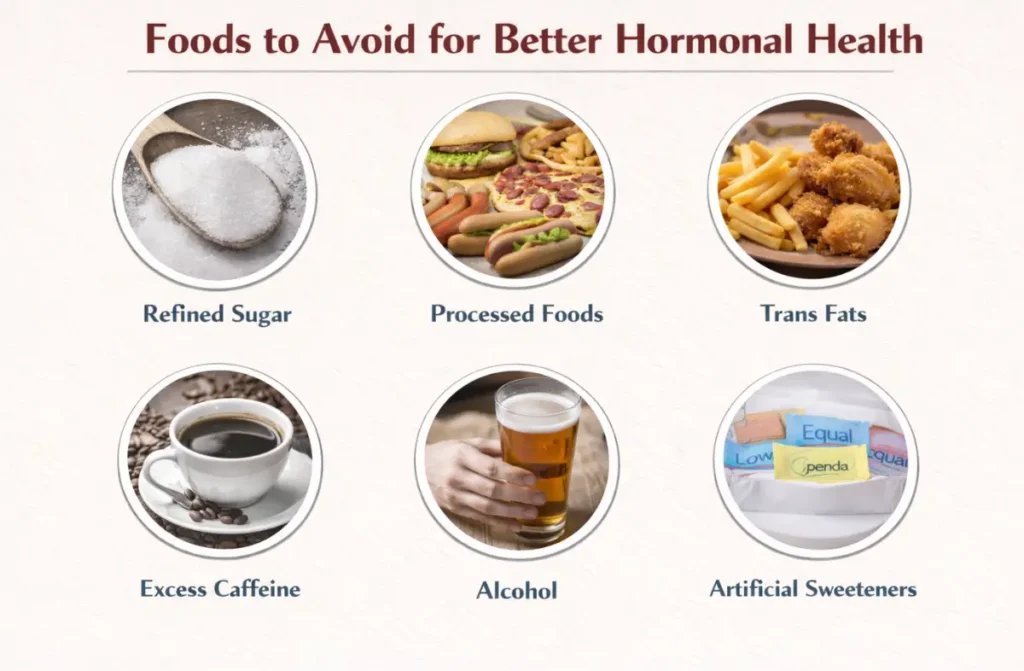
Not all foods support endocrine health. Foods That Cause Hormonal Imbalance include refined sugar, trans fats, processed snacks, alcohol, and excess caffeine. These trigger insulin spikes and chronic inflammation. Limiting Foods That Cause Hormonal Imbalance is just as important as adding nourishing options.
The Gut–Hormone Connection
A healthy gut helps metabolise estrogen and regulate hormone signalling. Probiotics from Greek yoghurt and fermented foods improve microbiome diversity, while prebiotics from vegetables nourish beneficial bacteria. Gut health is one of the most overlooked Natural Ways to Balance Your Hormones, yet it plays a central role in hormone recycling.
Meal Planning Tips for Hormonal Balance
Making Foods to Naturally Balance Hormones part of daily meals doesn’t need to be complicated:
- Breakfast: Greek yoghurt with flaxseeds and berries
- Lunch: Leafy green salad with avocado, nuts, and grilled salmon
- Snacks: Dark chocolate and mixed nuts
- Dinner: Quinoa with broccoli and turmeric-spiced protein
Consistency matters more than perfection.
Lifestyle Support Beyond Diet
Diet alone isn’t everything. Quality sleep, stress management, and movement amplify the impact of Foods for Hormonal Balance. Gentle exercise like yoga and walking improves insulin sensitivity. Adaptogens such as ashwagandha may help regulate cortisol when used under guidance.
Final Thoughts: Eating for Hormonal Health
Hormonal balance isn’t about extreme diets—it’s about smart, sustainable choices. Prioritising Foods for Hormonal Balance can improve mood, metabolism, reproductive health, and energy levels naturally. If symptoms persist despite lifestyle changes, professional guidance matters.
At Fatima IVF Fertility & Women’s Centre, expert specialists evaluate hormonal health holistically and guide personalised nutrition and fertility care. Early support can prevent long-term complications and optimise overall well-being.