Nutrition during pregnancy plays a vital role in supporting the health of both the mother and the developing baby. What an expecting mother eats directly influences fetal growth, brain development, and overall pregnancy outcomes. A balanced diet during this phase helps prevent complications and ensures steady nourishment throughout pregnancy.
Why Proper Nutrition is Crucial for Mother and Baby
The importance of nutrition during pregnancy goes beyond weight gain. Proper nutrition supports organ development in the baby while helping the mother maintain energy, immunity, and hormonal balance. Adequate nutrition for pregnant women also lowers the risk of anemia, gestational diabetes, and preterm birth, making pregnancy safer and healthier.
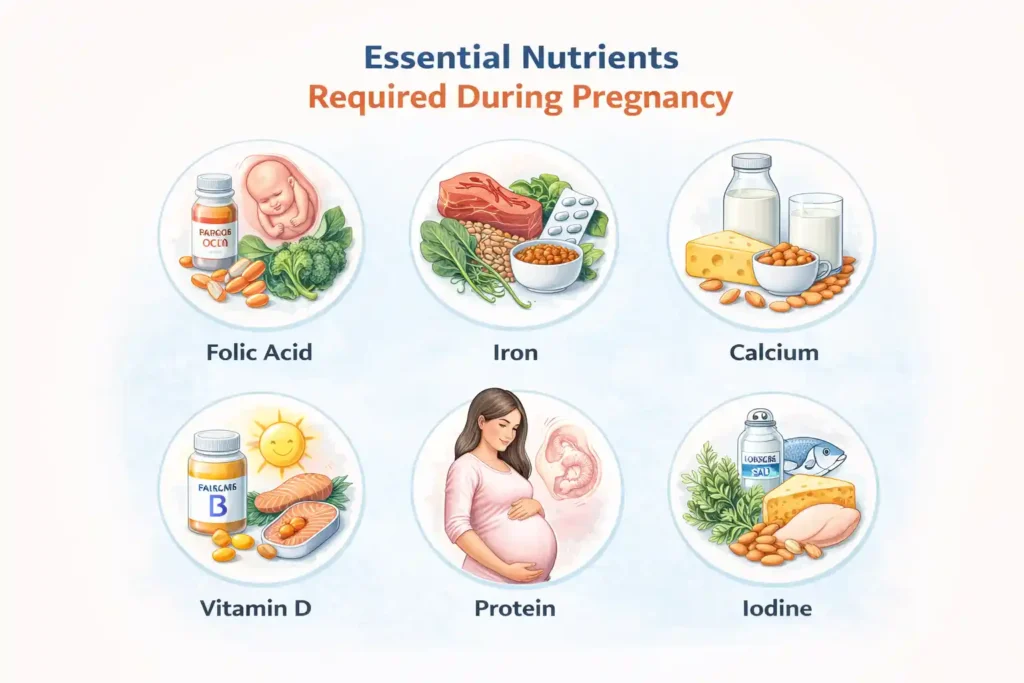
Essential Nutrients Required During Pregnancy
Meeting the nutritional requirements during pregnancy plays a vital role in supporting both fetal growth and maternal health. Each nutrient contributes uniquely to the baby’s development and helps the mother stay healthy throughout pregnancy.
Proteins
Proteins play a key role in forming and repairing cells and body tissues.. During pregnancy, they support the growth of the baby’s organs, muscles, and tissues while also helping the mother’s body adapt to physical changes. Adequate protein intake also supports placenta development and helps maintain maternal muscle strength.
Iron
Iron helps the body make hemoglobin, the protein responsible for transporting oxygen in the bloodstream.During pregnancy, a woman’s blood volume increases, increasing iron demand. Sufficient iron intake helps prevent anemia, reduces fatigue, and ensures the baby receives enough oxygen for healthy growth and development.
Calcium & Vitamin D
Calcium is crucial for the development of the baby’s bones and teeth, while vitamin D improves calcium absorption. If dietary calcium is insufficient, the body draws calcium from the mother’s bones, increasing fracture risk. Together, they support strong skeletal development for the baby and maintain maternal bone health.
Folic Acid
Folic acid is especially important during early pregnancy cramps as it supports proper brain and spinal cord formation. Adequate intake significantly reduces the risk of neural tube defects. It also supports healthy cell division and red blood cell formation throughout pregnancy.
Omega-3 Fatty Acids
Omega-3 fatty acids, particularly DHA, play a major role in fetal brain and eye development. They also support nervous system growth and may help reduce the risk of preterm birth. For mothers, omega-3s support heart health and help regulate inflammation during pregnancy.
Trimester-Wise Nutrition Guide:
First Trimester Nutrition
The first trimester focuses on building the foundation for fetal development. Nutrients like folic acid and iron are essential to support early brain and spinal formation. Light, frequent meals help manage nausea and fatigue while ensuring steady nutrient intake during early nutrition during pregnancy.
Second Trimester Nutrition
During the second trimester, the baby grows rapidly, increasing the need for calories and protein. A balanced diet with adequate calcium, healthy fats, and essential vitamins supports bone development and organ growth. This phase highlights the importance of balanced nutrition for pregnant women.
Third Trimester Nutrition
In the final trimester, iron and protein requirements rise to support increased blood volume and fetal weight gain. Proper hydration and nutrient-dense foods help prepare the body for labor and delivery. Maintaining good nutrition during pregnancy at this stage supports fetal maturity and maternal strength.
Foods to Eat & Avoid During Pregnancy:
Choosing the right foods is a key part of maintaining balanced nutrition during pregnancy, as it directly affects maternal health and fetal development.
Foods to Eat During Pregnancy:
Fresh fruits, vegetables, whole grains, lean proteins, dairy products, and nuts provide essential vitamins and minerals. These foods support energy levels, digestion, and steady baby growth. Including iron- and calcium-rich foods strengthens immunity and bone health. A nutrient-dense diet ensures consistent nutrition for pregnant women throughout all trimesters.
Foods to Avoid During Pregnancy:
Certain foods can increase the risk of infections or complications. Raw seafood, undercooked meats, unpasteurized dairy, excessive caffeine, and highly processed foods should be avoided. These can interfere with safe nutrition during pregnancy and may affect fetal health. Making mindful food choices reduces avoidable risks.
Role of Supplements in Pregnancy Nutrition:
Even with a balanced diet, some nutritional needs may not be fully met through food alone. Supplements such as iron, folic acid, calcium, and DHA help bridge these gaps safely. They support brain development, blood health, and bone strength. Supplements play an important role in meeting the nutritional requirements for pregnant women, but should always be taken under medical supervision.
Common Dietary Myths During Pregnancy
Many women believe that pregnancy requires eating double portions, but this is a misconception. The focus should be on nutrient-dense foods rather than excess calories, as overeating can lead to unhealthy weight gain. Another common myth is that all cravings must be satisfied, even when they involve sugary or processed foods. Giving in frequently can disturb balanced eating and affect nutrition during pregnancy. Understanding these myths helps mothers make informed choices and prioritize the realimportance of nutrition during pregnancy for healthy fetal development.
Importance of Hydration During Pregnancy
Proper hydration plays a vital role alongsidenutrition during pregnancy. Drinking enough water supports digestion, improves nutrient absorption, and helps maintain healthy blood circulation. Adequate fluid intake also prevents common issues such as constipation, fatigue, and urinary tract infections. Hydration is essential for maintaining amniotic fluid levels, which protect and support the baby. When combined with balanced nutrition during pregnancy, proper hydration promotes overall maternal comfort and fetal well-being.
Conclusion
Healthy food choices provide the nutritional base needed for a smooth and healthy pregnancy. By focusing on the right foods, essential nutrients, and hydration, mothers can support both their own health and their baby’s development. Prioritizing nutrition during pregnancy empowers women to experience a smoother pregnancy and sets the stage for long-term wellness.