

Infertility is not just a women’s issue. Many people still believe that, but the truth is different. In many couples, the male partner plays an equal role when it comes to difficulty in conceiving. That is why infertility treatment for men is just as important as treatment for women.
Many men feel confused at this stage. Some feel stressed or even embarrassed. But there is nothing to hide. Male infertility is a medical condition, and like most health issues, it can often be treated with the right care.
Today, there are many safe and effective male infertility treatment options available. With help from a fertility clinic or specialist, couples can find real hope. This guide will help you understand the causes, tests, and the best fertility treatment choices for men in simple terms.
What is Male Infertility?
Male infertility means a man has trouble helping his partner get pregnant. This usually happens due to problems with sperm.
Sperm are tiny cells that fertilize the female egg. For pregnancy to happen, sperm must be healthy, active, and present in enough numbers.
Male infertility can involve:
- Low sperm count
- Poor sperm movement
- Abnormal sperm shape
- Blockage that prevents sperm release
Doctors usually diagnose male infertility after a couple tries to conceive for about one year without success.
It is important to understand that infertility does not always mean permanent problems. In many cases, proper fertility solutions for men can improve the situation.
What happens if a man is infertile?
When a man is infertile, it becomes difficult for a couple to conceive naturally. This does not mean pregnancy is impossible, but it may take longer or need medical support.
Here is what may happen:
- Sperm may not reach the egg
- Sperm may not be strong enough to fertilize the egg
- Ejaculation may not contain enough sperm
Many men do not notice any symptoms. That is why testing is important.
Emotionally, this can be challenging. Many men feel stress, guilt, or frustration. They may avoid talking about it, even with their partner.
Doctors usually suggest early evaluation. The sooner the cause is found, the better the chances of choosing the best fertility treatment.
With modern medical care, many couples go on to have healthy pregnancies even after a diagnosis of male infertility.
How common is male infertility?
Male infertility refers to a condition where a man faces difficulty in contributing to pregnancy.
Studies show that:
- About 1 in 7 couples face infertility
- In nearly 40 to 50 percent of cases, the male partner is involved
This means male infertility is not rare at all.
Many men feel alone during this time, but they are not. It is a common medical condition treated every day at fertility clinics.
In cities and growing areas, more couples are now visiting a nearby center for early consultation. Awareness is improving, and more men are open to testing and treatment.
The good news is that medical science has advanced a lot. Today, there are many effective fertility solutions for men available.
Causes of Male Infertility
Male infertility can happen for many reasons. These causes are usually grouped into medical, lifestyle, and environmental factors.
Medical Causes
These are health-related conditions that affect sperm production or delivery:
- Hormone imbalance
- Varicocele (swelling of veins in the testicles)
- Infections affecting reproductive organs
- Genetic disorders
- Blockage in sperm ducts
- Problems with ejaculation
Doctors often treat these with medicines or surgery.
Lifestyle Causes
Daily habits can also affect fertility:
- Smoking
- Alcohol use
- Drug use
- Poor diet
- Lack of exercise
- Obesity
These habits can lower sperm quality over time.
Environmental Factors
External factors also play a role:
- Exposure to chemicals or toxins
- Too much heat around the body, like from hot baths or snug clothing
- Radiation or pollution
Many men are not aware of these risks. But small changes can help improve fertility.
Doctors usually suggest lifestyle changes along with male infertility treatment to get better results.
Who does male infertility affect?
Male infertility can affect men of all ages, but it is more common in certain groups.
It may affect:
- Men over the age of 35
- Men with health conditions like diabetes
- Men with hormonal disorders
- Men with past surgeries or injuries in the reproductive area
It can also affect men who:
- Work in high heat environments
- Are exposed to chemicals
- Have unhealthy lifestyle habits
Even young, healthy men can face fertility issues. That is why testing is important if pregnancy does not happen after a year.
Many couples visit a fertility clinic together. This helps both partners get tested and find the right solution.
Early consultation with a specialist can save time and reduce stress. Doctors can guide couples toward the best fertility treatment based on their condition.
Is healthy sperm thick or runny?
This is a concern many men have..
Semen, which carries sperm, is usually slightly thick when first released. After a few minutes, it becomes more liquid.
So, both thick and slightly runny textures can be normal.
What really matters is not just thickness but:
- Sperm count
- Sperm movement
- Sperm shape
A man cannot judge fertility just by looking at semen. Even normal-looking semen may have issues.
That is why doctors recommend a semen analysis test. This gives a clear picture of sperm health.
If there is any concern, a fertility specialist can guide you toward proper infertility treatment for men.
Diagnosis & Tests
Diagnosis is the first step in finding the right treatment.
Doctors usually begin with:
Medical History
- Past illnesses
- Lifestyle habits
- Sexual health
- Family history
Physical Examination
The doctor checks the reproductive organs for any visible issues.
Semen Analysis
This is the most important test.
It checks:
- Sperm count
- Movement
- Shape
- Volume
Doctors may ask for more than one sample for accuracy.
Blood Tests
These check hormone levels like testosterone.
Imaging Tests
Ultrasound may be used to check for blockages or varicocele.
Genetic Testing
In some cases, doctors check for inherited conditions.
Many men feel nervous during testing. But these tests are simple and safe.
A nearby fertility clinic can guide you step by step. Early diagnosis helps in choosing the right male infertility treatment and improves success chances.
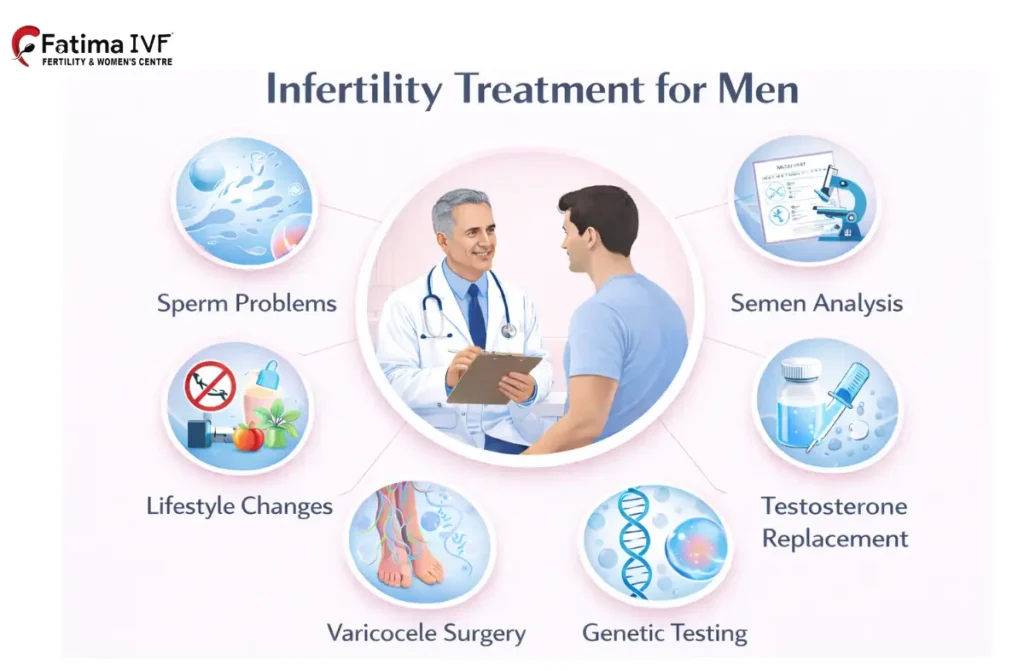
Infertility Treatment Options for Men
There are many treatment options available today. The choice depends on the cause of infertility.
Medical Treatments
Doctors may prescribe medicines to:
- Improve hormone levels
- Treat infections
- Support sperm production
These treatments are often the first step.
Surgical Treatments
Surgery may be needed for certain conditions:
- Varicocele repair
- Removal of blockages
- Sperm retrieval procedures
These procedures are usually safe and effective.
Assisted Reproductive Techniques (ART)
If other treatments do not work, doctors may suggest ART.
Common options include:
- IUI (Intrauterine Insemination)
- IVF (In Vitro Fertilization)
- ICSI involves injecting a single sperm straight into the egg.
Doctors usually suggest these as the best fertility treatment when sperm issues are severe.
A fertility specialist will guide couples based on their condition and needs.
Natural Ways to Improve Male Fertility
Along with medical care, natural steps can also help.
Simple changes include:
- Healthy diet
- Exercising regularly
- Avoiding smoking and alcohol
- Managing stress
- Getting enough sleep
Doctors often suggest these habits as part of fertility solutions for men.
Even small lifestyle changes can improve sperm health over time.
Psychological Impact & Support
Infertility can affect mental health.
Many men feel:
- Stress
- Anxiety
- Low confidence
Some may avoid talking about it.
Support is very important. Talking to a partner or counselor can help.
Many fertility clinics also offer emotional support services.
Remember, infertility is a medical issue.
When to See a Doctor
It is best to consult a doctor if:
- You have tried for one year without success
- You have known health issues
- You notice problems with sexual function
Doctors usually suggest early consultation. This helps in faster diagnosis and treatment.
You can visit a nearby fertility center for proper evaluation and support.
Success Rates & Expectations
Success depends on many factors:
- Age
- Cause of infertility
- Type of treatment
Some men respond well to simple treatments. Others may need advanced options.
Doctors usually explain realistic expectations before starting treatment.
With the right care, many couples achieve successful pregnancies.
Prevention Tips
While not all cases can be prevented, some steps can reduce risk:
- Maintain a healthy weight
- Avoid smoking and alcohol
- Protect against infections
- Avoid excessive heat exposure
- Eat a balanced diet
Regular health checkups can also help detect issues early.
Conclusion
It may not seem common, but male infertility affects many men, and it can often be treated with the right care.
From simple lifestyle changes to advanced medical procedures, there are many effective infertility treatment for men options available today.
If you or your partner are facing difficulties, do not wait too long.Consulting a fertility expert at an early stage can lead to better results.
A trusted center like Fatima Fertility Center can guide you through every step with care and expertise.
Keep in mind, reaching out for help is the first step toward finding hope.With the right support and treatment, many couples achieve their dream of parenthood.