

Understanding Infertility and Ovarian Reserve: Insights from a Specialist
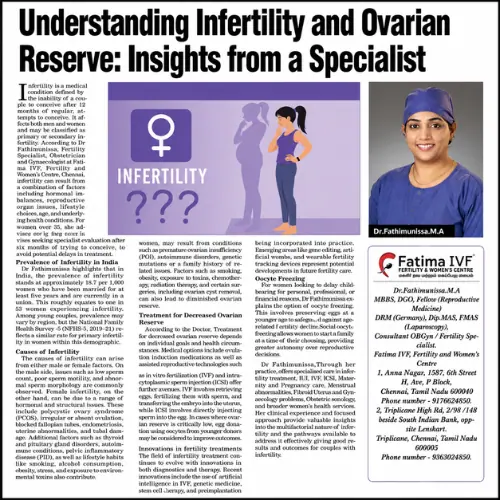
Dr. Fathimunissa’s recent feature in the Times of India has brought fresh attention to a topic that affects many couples across Chennai — infertility and the role ovarian reserve plays in family planning. As highlighted in the Times of India article, infertility is a medical condition marked by the inability to conceive after 12 months of regular, unprotected intercourse. At Fatima IVF Fertility & Women’s Centre, we believe that understanding these insights from the Times of India feature can help more couples take timely, informed steps toward parenthood.
Prevalence of Infertility in India
According to the Times of India report, infertility in India affects approximately 10 to 14 percent of couples of reproductive age. This means that at least one in every 6 couples in the country experiences some difficulty conceiving. Recognising this is common — not something to feel isolated by — is often the first step toward seeking the right care.
Causes of Infertility
Infertility can arise from either the male or female partner, and sometimes from a combination of both. In women, common causes include Polycystic Ovary Syndrome (PCOS), blocked fallopian tubes, endometriosis, thyroid imbalances, and reduced ovarian reserve — a topic covered in depth by the Times of India feature — often connected to age. In men, causes can include low sperm count, poor sperm motility, or lifestyle-related factors. Diet, stress, smoking, alcohol use, and irregular sleep patterns can also play a role for both partners.
Treatment for Decreased Ovarian Reserve
According to Dr. Fathimunissa, treatment for decreased ovarian reserve begins with a detailed hormonal and ultrasound-based evaluation. Medical options may include ovulation induction medications, along with assisted reproductive techniques such as:
- In-vitro fertilisation (IVF)
- Intracytoplasmic sperm injection (ICSI)
- Donor egg options, when medically appropriate
The right pathway depends on each woman’s individual hormone levels, age, and reproductive goals, and is always discussed in detail before any decision is made.
Oocyte Freezing: Preserving Future Options
For women who wish to delay childbearing for personal, professional, or medical reasons, oocyte (egg) freezing is becoming an increasingly popular option. This procedure allows eggs to be retrieved and stored at a healthier, more viable stage, giving women greater flexibility in planning their families on their own timeline.
Innovations Shaping Fertility Care
Fertility treatment continues to evolve, a point the Times of India article also touched on. Genetic diagnostics, hormone therapy advances, and improved embryo culture techniques are helping doctors offer more personalised and effective care. As Dr. Fathimunissa notes, staying current with these developments allows the clinical team to recommend treatment plans suited to each patient’s unique needs.
Take the First Step
If you or someone you know has questions about fertility, ovarian reserve, or family planning options, Fatima IVF Fertility & Women’s Centre is here to guide you through every step with clarity and care.
Dr. Fathimunissa M.A MBBS, DGO, Fellow (Reproductive Medicine) DRM (Germany), Dip.MAS, FMAS (Laparoscopy)
Fatima IVF Fertility & Women’s Centre
1, Anna Nagar, 1587, 6th Street H, Ave, F Block, Chennai, Tamil Nadu 600040
2. Triplicane , No. 1/1, Ground Floor, Triplicane High Road, Opposite A2B, Chennai, Tamil Nadu 600005