Fertility treatment for women has helped many couples achieve their dream of becoming parents. If you are trying to conceive and facing challenges, you are not alone. Many women feel confused at this stage and are unsure about what steps to take next.
Fertility issues can affect both physical health and emotional well being. The good news is that modern medicine offers many safe and effective solutions. With the right diagnosis and care, pregnancy is possible for many women.
In this guide, you will learn about female infertility treatment, different options available, and when to visit a fertility clinic. The goal is to help you feel informed and confident about your next step.
What is Female Infertility?
Female infertility means a woman is not able to get pregnant after trying for a certain period of time. Doctors usually define it as not conceiving after 12 months of regular unprotected intercourse. For women above 35, this time may be shorter.
Infertility can happen due to problems with ovulation, fallopian tubes, uterus, or hormones. Sometimes, the cause is not clear. This is called unexplained infertility.
Many women feel worried or stressed when they hear this diagnosis. That is completely normal. The important thing to remember is that infertility does not mean there is no hope.
With proper testing and guidance from a fertility specialist, many causes can be treated. Early diagnosis often improves the chances of success.
Causes of Infertility in Women
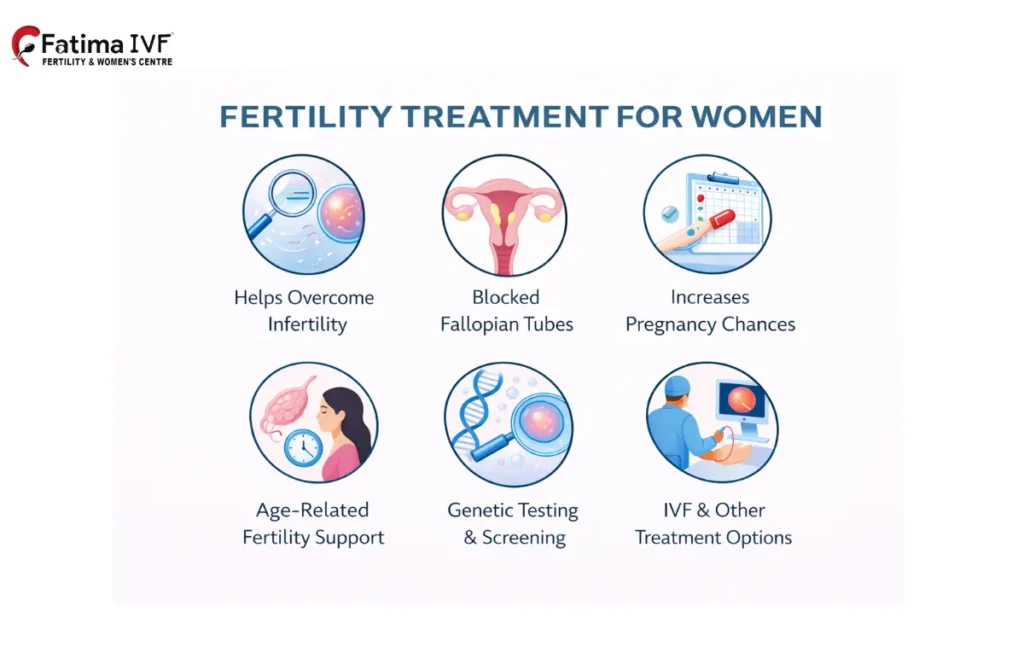
There are many reasons why infertility can occur. Understanding the cause helps doctors choose the best fertility treatment.
Common causes include:
- Ovulation problems
- Irregular or absent ovulation
- Often linked to conditions like PCOS
- Blocked fallopian tubes
- Prevent sperm from reaching the egg
- Can be caused by infections or previous surgeries
- Hormonal imbalance
- Affects egg release and menstrual cycle
- Thyroid issues can also play a role
- Endometriosis
- Tissue grows outside the uterus
- Can affect egg quality and implantation
- Age factor
- Fertility declines after 30
- Egg quality and quantity reduce over time
- Lifestyle factors
- Smoking
- Excess weight or underweight
- Stress
Doctors usually suggest tests like blood work, ultrasound, and sometimes laparoscopy to find the exact cause. Identifying the reason is the first step toward choosing the best fertility treatment.
Types of Fertility Treatments for Women
There are different types of fertility treatment for women. The choice depends on the cause of infertility, age, and overall health.
1. Medications
Doctors usually suggest medications as the first step.
- Help stimulate ovulation
- Regulate hormones
- Improve egg production
These are often used in mild cases and are part of many female infertility treatment plans.
2. Intrauterine Insemination or IUI
IUI is a simple and less invasive treatment.
- Sperm is placed directly into the uterus
- Done during ovulation
- Increases chances of fertilization
It is often recommended for:
- Mild male factor infertility
- Unexplained infertility
3. In Vitro Fertilization or IVF
IVF is one of the best fertility treatment options available today.
- Eggs are collected from the ovaries
- Fertilized with sperm in a lab
- The embryo is placed in the uterus
IVF is helpful in cases like:
- Blocked tubes
- Severe infertility
- Older age
Many women feel nervous about IVF, but doctors guide each step carefully.
4. Surgical Treatments
Sometimes surgery is needed to correct physical problems.
- Remove fibroids
- Treat endometriosis
- Open blocked tubes
Surgery can improve natural fertility or make other treatments more effective.
Each treatment has its own benefits. A fertility specialist at a nearby center can suggest what suits your condition best.
Fertility Treatment Process Step by Step
Starting fertility treatment can feel overwhelming. Knowing the steps can make it easier.
Step 1: Initial Consultation
- Meet a fertility specialist
- Discuss medical history
- Share concerns openly
Step 2: Diagnostic Tests
Doctors usually suggest:
- Blood tests
- Ultrasound scans
- Hormone checks
These help identify the cause of infertility.
Step 3: Treatment Planning
- A personalized plan is created
- Based on age, health, and test results
Step 4: Starting Treatment
Depending on the plan:
- Medications may begin
- Procedures like IUI or IVF may be scheduled
Step 5: Monitoring
- Regular scans track progress
- Hormone levels are checked
Step 6: Procedure and Follow Up
- Egg retrieval or insemination is done
- Pregnancy test follows after a few weeks
Many women feel anxious during this time. Doctors usually suggest staying calm and following instructions carefully.
Success Rates of Fertility Treatments
Success rates vary based on several factors. There is no single answer for everyone.
Key factors that affect success:
- Age of the woman
- Cause of infertility
- Type of treatment used
- Overall health
For example:
- IUI has moderate success rates
- IVF has higher success rates, especially in younger women
Doctors usually explain realistic expectations during consultation. It is important to stay patient and positive.
Sometimes more than one cycle is needed. This is common and does not mean the treatment is not working.
Choosing the best fertility treatment with expert guidance improves your chances.
Risks and Side Effects
Fertility treatments are generally safe, but like any medical procedure, they may have some risks.
Possible side effects include:
- Mild pain or discomfort
- Hormonal mood changes
- Bloating
- Headaches
In rare cases:
- Ovarian hyperstimulation syndrome
- Multiple pregnancies
Doctors monitor patients closely to reduce risks. Always follow medical advice and report any unusual symptoms.
Most women complete treatment safely with proper care.
Natural Ways to Boost Fertility Alongside Treatment
Medical treatment works best when combined with a healthy lifestyle.
Simple ways to support fertility:
- Eat a balanced diet Include fruits, vegetables, and whole grains
- Maintain a healthy weight
- Exercise regularly but not excessively
- Get enough sleep
- Reduce stress
Avoid:
- Smoking
- Alcohol
- Excess caffeine
Some women also try yoga or meditation. These can help reduce stress levels.
While natural methods alone may not treat infertility, they support overall reproductive health and improve treatment outcomes.
When to See a Fertility Specialist
Knowing when to seek help is important.
You should consider a consultation if:
- Trying for 1 year without success
- Trying for 6 months if above 35
- Irregular or missed periods
- Known medical conditions like PCOS
- History of miscarriage
Many women delay seeking help due to fear or confusion. Early consultation at a fertility clinic can save time and improve results.
A nearby center with experienced doctors can guide you properly from the start.
Emotional Support During Fertility Treatment
Fertility treatment is not just physical. It can also affect your emotions.
Many women feel:
- Stress
- Anxiety
- Sadness
- Hope and fear at the same time
This is completely normal.
Ways to cope:
- Talk to your partner openly
- Join support groups
- Speak with a counselor if needed
- Stay informed but avoid overthinking
Doctors usually suggest focusing on one step at a time. Emotional support plays a big role in overall well being during treatment.
Conclusion
Fertility treatment for women has come a long way and offers real hope to many families. From medications to advanced procedures like IVF, there are many options available today.
The key is early diagnosis, the right treatment plan, and proper support. Every woman’s journey is different, and that is okay. With expert care, many women achieve successful pregnancies.
If you are facing difficulty in conceiving, consider visiting a trusted fertility clinic for guidance. A consultation can help you understand your options clearly.
At Fatima Fertility Center, experienced specialists provide personalized care and support at every step. Taking that first step toward consultation could bring you closer to your dream of parenthood.